Compare commits
| Author | SHA1 | Date | |
|---|---|---|---|
 QMK Bot |
7891de7f6d | ||
|
jorgemanzo
|
897888db41 | ||
|
jotix
|
4f5b34af56 | ||
|
Joel Challis
|
b94f6cb116 | ||
|
XScorpion2andfauxpark
|
0f0c73f14a | ||
|
Drashna Jaelre
|
f6b5f6db76 | ||
|
Richard Baptist
|
381b73fcac | ||
|
Salicylic-acid3
|
ad36bb37dd | ||
|
moyi4681
|
1c9e450218 | ||
|
James Young
|
700bea41f8 | ||
|
|
43889326fc |
No files matched your search
+24
@@ -95,6 +95,30 @@ qmk compile <configuratorExport.json>
|
|||||||
qmk compile -kb <keyboard_name> -km <keymap_name>
|
qmk compile -kb <keyboard_name> -km <keymap_name>
|
||||||
```
|
```
|
||||||
|
|
||||||
|
## `qmk flash`
|
||||||
|
|
||||||
|
This command is similar to `qmk compile`, but can also target a bootloader. The bootloader is optional, and is set to `:flash` by default.
|
||||||
|
To specify a different bootloader, use `-bl <bootloader>`. Visit <https://docs.qmk.fm/#/flashing>
|
||||||
|
for more details of the available bootloaders.
|
||||||
|
|
||||||
|
**Usage for Configurator Exports**:
|
||||||
|
|
||||||
|
```
|
||||||
|
qmk flash <configuratorExport.json> -bl <bootloader>
|
||||||
|
```
|
||||||
|
|
||||||
|
**Usage for Keymaps**:
|
||||||
|
|
||||||
|
```
|
||||||
|
qmk flash -kb <keyboard_name> -km <keymap_name> -bl <bootloader>
|
||||||
|
```
|
||||||
|
|
||||||
|
**Listing the Bootloaders**
|
||||||
|
|
||||||
|
```
|
||||||
|
qmk flash -b
|
||||||
|
```
|
||||||
|
|
||||||
## `qmk config`
|
## `qmk config`
|
||||||
|
|
||||||
This command lets you configure the behavior of QMK. For the full `qmk config` documentation see [CLI Configuration](cli_configuration.md).
|
This command lets you configure the behavior of QMK. For the full `qmk config` documentation see [CLI Configuration](cli_configuration.md).
|
||||||
|
|||||||
@@ -41,11 +41,15 @@ First you will need a build a circuit to drive the solenoid through a mosfet as
|
|||||||
|
|
||||||
[Wiring diagram provided by Adafruit](https://playground.arduino.cc/uploads/Learning/solenoid_driver.pdf)
|
[Wiring diagram provided by Adafruit](https://playground.arduino.cc/uploads/Learning/solenoid_driver.pdf)
|
||||||
|
|
||||||
Select a pin that has PWM for the signal pin
|
|
||||||
|
|
||||||
```
|
| Settings | Default | Description |
|
||||||
#define SOLENOID_PIN *pin*
|
|--------------------------|---------------|-------------------------------------------------------|
|
||||||
```
|
|`SOLENOID_PIN` | *Not defined* |Configures the pin that the Solenoid is connected to. |
|
||||||
|
|`SOLENOID_DEFAULT_DWELL` | `12` ms |Configures the default dwell time for the solenoid. |
|
||||||
|
|`SOLENOID_MIN_DWELL` | `4` ms |Sets the lower limit for the dwell. |
|
||||||
|
|`SOLENOID_MAX_DWELL` | `100` ms |Sets the upper limit for the dwell. |
|
||||||
|
|
||||||
|
?> Dwell time is how long the "plunger" stays activated. The dwell time changes how the solenoid sounds.
|
||||||
|
|
||||||
Beware that some pins may be powered during bootloader (ie. A13 on the STM32F303 chip) and will result in the solenoid kept in the on state through the whole flashing process. This may overheat and damage the solenoid. If you find that the pin the solenoid is connected to is triggering the solenoid during bootloader/DFU, select another pin.
|
||||||
|
|
||||||
@@ -151,4 +155,4 @@ This will set what sequence HPT_RST will set as the active mode. If not defined,
|
|||||||
|
|
||||||
### DRV2605L Continuous Haptic Mode
|
### DRV2605L Continuous Haptic Mode
|
||||||
|
|
||||||
This mode sets continuous haptic feedback with the option to increase or decrease strength.
|
This mode sets continuous haptic feedback with the option to increase or decrease strength.
|
||||||
@@ -29,12 +29,8 @@
|
|||||||
# define SOLENOID_MIN_DWELL 4
|
# define SOLENOID_MIN_DWELL 4
|
||||||
#endif
|
#endif
|
||||||
|
|
||||||
#ifndef SOLENOID_ACTIVE
|
|
||||||
# define SOLENOID_ACTIVE false
|
|
||||||
#endif
|
|
||||||
|
|
||||||
#ifndef SOLENOID_PIN
|
#ifndef SOLENOID_PIN
|
||||||
# define SOLENOID_PIN F6
|
# error SOLENOID_PIN not defined
|
||||||
#endif
|
#endif
|
||||||
|
|
||||||
void solenoid_buzz_on(void);
|
void solenoid_buzz_on(void);
|
||||||
|
|||||||
@@ -133,9 +133,8 @@ void rx_led_off(void)
|
|||||||
|
|
||||||
void matrix_init(void)
|
void matrix_init(void)
|
||||||
{
|
{
|
||||||
debug_enable = true;
|
split_keyboard_setup();
|
||||||
debug_matrix = true;
|
|
||||||
debug_mouse = true;
|
|
||||||
// initialize row and col
|
// initialize row and col
|
||||||
unselect_rows();
|
unselect_rows();
|
||||||
init_cols();
|
init_cols();
|
||||||
|
|||||||
@@ -7,6 +7,11 @@
|
|||||||
#include "split_util.h"
|
#include "split_util.h"
|
||||||
#include "matrix.h"
|
#include "matrix.h"
|
||||||
#include "keyboard.h"
|
#include "keyboard.h"
|
||||||
|
#include "wait.h"
|
||||||
|
|
||||||
|
#ifdef EE_HANDS
|
||||||
|
# include "eeconfig.h"
|
||||||
|
#endif
|
||||||
|
|
||||||
#ifdef USE_MATRIX_I2C
|
#ifdef USE_MATRIX_I2C
|
||||||
# include "i2c.h"
|
# include "i2c.h"
|
||||||
@@ -14,19 +19,59 @@
|
|||||||
# include "split_scomm.h"
|
# include "split_scomm.h"
|
||||||
#endif
|
#endif
|
||||||
|
|
||||||
|
#ifndef SPLIT_USB_TIMEOUT
|
||||||
|
# define SPLIT_USB_TIMEOUT 2500
|
||||||
|
#endif
|
||||||
|
|
||||||
volatile bool isLeftHand = true;
|
volatile bool isLeftHand = true;
|
||||||
|
|
||||||
static void setup_handedness(void) {
|
bool waitForUsb(void) {
|
||||||
#ifdef EE_HANDS
|
for (uint8_t i = 0; i < (SPLIT_USB_TIMEOUT / 100); i++) {
|
||||||
isLeftHand = eeprom_read_byte(EECONFIG_HANDEDNESS);
|
// This will return true of a USB connection has been established
|
||||||
#else
|
if (UDADDR & _BV(ADDEN)) {
|
||||||
// I2C_MASTER_RIGHT is deprecated, use MASTER_RIGHT instead, since this works for both serial and i2c
|
return true;
|
||||||
#if defined(I2C_MASTER_RIGHT) || defined(MASTER_RIGHT)
|
}
|
||||||
isLeftHand = !has_usb();
|
wait_ms(100);
|
||||||
#else
|
}
|
||||||
isLeftHand = has_usb();
|
|
||||||
#endif
|
// Avoid NO_USB_STARTUP_CHECK - Disable USB as the previous checks seem to enable it somehow
|
||||||
#endif
|
(USBCON &= ~(_BV(USBE) | _BV(OTGPADE)));
|
||||||
|
|
||||||
|
return false;
|
||||||
|
}
|
||||||
|
|
||||||
|
__attribute__((weak)) bool is_keyboard_left(void) {
|
||||||
|
#if defined(SPLIT_HAND_PIN)
|
||||||
|
// Test pin SPLIT_HAND_PIN for High/Low, if low it's right hand
|
||||||
|
setPinInput(SPLIT_HAND_PIN);
|
||||||
|
return readPin(SPLIT_HAND_PIN);
|
||||||
|
#elif defined(EE_HANDS)
|
||||||
|
return eeconfig_read_handedness();
|
||||||
|
#elif defined(MASTER_RIGHT)
|
||||||
|
return !is_keyboard_master();
|
||||||
|
#endif
|
||||||
|
|
||||||
|
return is_keyboard_master();
|
||||||
|
}
|
||||||
|
|
||||||
|
__attribute__((weak)) bool is_keyboard_master(void) {
|
||||||
|
static enum { UNKNOWN, MASTER, SLAVE } usbstate = UNKNOWN;
|
||||||
|
|
||||||
|
// only check once, as this is called often
|
||||||
|
if (usbstate == UNKNOWN) {
|
||||||
|
#if defined(SPLIT_USB_DETECT)
|
||||||
|
usbstate = waitForUsb() ? MASTER : SLAVE;
|
||||||
|
#elif defined(__AVR__)
|
||||||
|
USBCON |= (1 << OTGPADE); // enables VBUS pad
|
||||||
|
wait_us(5);
|
||||||
|
|
||||||
|
usbstate = (USBSTA & (1 << VBUS)) ? MASTER : SLAVE; // checks state of VBUS
|
||||||
|
#else
|
||||||
|
usbstate = MASTER;
|
||||||
|
#endif
|
||||||
|
}
|
||||||
|
|
||||||
|
return (usbstate == MASTER);
|
||||||
}
|
}
|
||||||
|
|
||||||
static void keyboard_master_setup(void) {
|
static void keyboard_master_setup(void) {
|
||||||
@@ -47,14 +92,9 @@ static void keyboard_slave_setup(void) {
|
|||||||
#endif
|
#endif
|
||||||
}
|
}
|
||||||
|
|
||||||
bool has_usb(void) {
|
// this code runs before the usb and keyboard is initialized
|
||||||
USBCON |= (1 << OTGPADE); //enables VBUS pad
|
|
||||||
_delay_us(5);
|
|
||||||
return (USBSTA & (1<<VBUS)); //checks state of VBUS
|
|
||||||
}
|
|
||||||
|
|
||||||
void split_keyboard_setup(void) {
|
void split_keyboard_setup(void) {
|
||||||
setup_handedness();
|
isLeftHand = is_keyboard_left();
|
||||||
|
|
||||||
if (has_usb()) {
|
if (has_usb()) {
|
||||||
keyboard_master_setup();
|
keyboard_master_setup();
|
||||||
@@ -64,7 +104,7 @@ void split_keyboard_setup(void) {
|
|||||||
sei();
|
sei();
|
||||||
}
|
}
|
||||||
|
|
||||||
// this code runs before the usb and keyboard is initialized
|
// backwards compat
|
||||||
void matrix_setup(void) {
|
bool has_usb(void) {
|
||||||
split_keyboard_setup();
|
return is_keyboard_master();
|
||||||
}
|
}
|
||||||
@@ -1,13 +1,13 @@
|
|||||||
{
|
{
|
||||||
"keyboard_name": "dz60rgb",
|
"keyboard_name": "DZ60RGB",
|
||||||
"url": "",
|
"url": "",
|
||||||
"maintainer": "dztch",
|
"maintainer": "dztech",
|
||||||
"width": 14,
|
"width": 15,
|
||||||
"height": 5,
|
"height": 5,
|
||||||
"layouts": {
|
"layouts": {
|
||||||
"LAYOUT": {
|
"LAYOUT": {
|
||||||
"key_count": 63,
|
"key_count": 63,
|
||||||
"layout": [{"label":"~", "x":0, "y":0}, {"label":"!", "x":1, "y":0}, {"label":"@", "x":2, "y":0}, {"label":"#", "x":3, "y":0}, {"label":"$", "x":4, "y":0}, {"label":"%", "x":5, "y":0}, {"label":"^", "x":6, "y":0}, {"label":"&", "x":7, "y":0}, {"label":"*", "x":8, "y":0}, {"label":"(", "x":9, "y":0}, {"label":")", "x":10, "y":0}, {"label":"_", "x":11, "y":0}, {"label":"+", "x":12, "y":0}, {"label":"Backspace", "x":13, "y":0, "w":2}, {"label":"Tab", "x":0, "y":1, "w":1.5}, {"label":"Q", "x":1.5, "y":1}, {"label":"W", "x":2.5, "y":1}, {"label":"E", "x":3.5, "y":1}, {"label":"R", "x":4.5, "y":1}, {"label":"T", "x":5.5, "y":1}, {"label":"Y", "x":6.5, "y":1}, {"label":"U", "x":7.5, "y":1}, {"label":"I", "x":8.5, "y":1}, {"label":"O", "x":9.5, "y":1}, {"label":"P", "x":10.5, "y":1}, {"label":"{", "x":11.5, "y":1}, {"label":"}", "x":12.5, "y":1}, {"label":"|", "x":13.5, "y":1, "w":1.5}, {"label":"Caps Lock", "x":0, "y":2, "w":1.75}, {"label":"A", "x":1.75, "y":2}, {"label":"S", "x":2.75, "y":2}, {"label":"D", "x":3.75, "y":2}, {"label":"F", "x":4.75, "y":2}, {"label":"G", "x":5.75, "y":2}, {"label":"H", "x":6.75, "y":2}, {"label":"J", "x":7.75, "y":2}, {"label":"K", "x":8.75, "y":2}, {"label":"L", "x":9.75, "y":2}, {"label":":", "x":10.75, "y":2}, {"label":"\"", "x":11.75, "y":2}, {"label":"Enter", "x":12.75, "y":2, "w":2.25}, {"label":"Shift", "x":0, "y":3, "w":2.25}, {"label":"Z", "x":2.25, "y":3}, {"label":"X", "x":3.25, "y":3}, {"label":"C", "x":4.25, "y":3}, {"label":"V", "x":5.25, "y":3}, {"label":"B", "x":6.25, "y":3}, {"label":"N", "x":7.25, "y":3}, {"label":"M", "x":8.25, "y":3}, {"label":"<", "x":9.25, "y":3}, {"label":">", "x":10.25, "y":3}, {"label":"Shift", "x":11.25, "y":3, "w":1.75}, {"label":"\u2191", "x":13, "y":3},{"label":"?", "x":14, "y":3}, {"label":"Ctrl", "x":0, "y":4, "w":1.25}, {"label":"Win", "x":1.25, "y":4, "w":1.25}, {"label":"Alt", "x":2.5, "y":4, "w":1.25}, {"x":3.75, "y":4, "w":6.25}, {"label":"Alt", "x":10, "y":4}, {"label":"Ctrl", "x":11, "y":4}, {"label":"\u2190", "x":12, "y":4}, {"label":"\u2193", "x":13, "y":4}, {"label":"\u2192", "x":14, "y":4}]
|
||||||
},
|
}
|
||||||
}
|
}
|
||||||
}
|
}
|
||||||
@@ -22,7 +22,7 @@ COMMAND_ENABLE = no # Commands for debug and configuration
|
|||||||
# Do not enable SLEEP_LED_ENABLE. it uses the same timer as BACKLIGHT_ENABLE
|
# Do not enable SLEEP_LED_ENABLE. it uses the same timer as BACKLIGHT_ENABLE
|
||||||
SLEEP_LED_ENABLE = no # Breathing sleep LED during USB suspend
|
SLEEP_LED_ENABLE = no # Breathing sleep LED during USB suspend
|
||||||
# if this doesn't work, see here: https://github.com/tmk/tmk_keyboard/wiki/FAQ#nkro-doesnt-work
|
# if this doesn't work, see here: https://github.com/tmk/tmk_keyboard/wiki/FAQ#nkro-doesnt-work
|
||||||
NKRO_ENABLE = no # USB Nkey Rollover
|
NKRO_ENABLE = yes # USB Nkey Rollover
|
||||||
BACKLIGHT_ENABLE = yes # Enable keyboard backlight functionality on B7 by default
|
BACKLIGHT_ENABLE = yes # Enable keyboard backlight functionality on B7 by default
|
||||||
RGBLIGHT_ENABLE = yes # Enable keyboard RGB underglow
|
RGBLIGHT_ENABLE = yes # Enable keyboard RGB underglow
|
||||||
MIDI_ENABLE = no # MIDI support (+2400 to 4200, depending on config)
|
MIDI_ENABLE = no # MIDI support (+2400 to 4200, depending on config)
|
||||||
|
|||||||
@@ -22,7 +22,7 @@ COMMAND_ENABLE = yes # Commands for debug and configuration
|
|||||||
# Do not enable SLEEP_LED_ENABLE. it uses the same timer as BACKLIGHT_ENABLE
|
# Do not enable SLEEP_LED_ENABLE. it uses the same timer as BACKLIGHT_ENABLE
|
||||||
SLEEP_LED_ENABLE = no # Breathing sleep LED during USB suspend
|
SLEEP_LED_ENABLE = no # Breathing sleep LED during USB suspend
|
||||||
# if this doesn't work, see here: https://github.com/tmk/tmk_keyboard/wiki/FAQ#nkro-doesnt-work
|
# if this doesn't work, see here: https://github.com/tmk/tmk_keyboard/wiki/FAQ#nkro-doesnt-work
|
||||||
NKRO_ENABLE = no # USB Nkey Rollover
|
NKRO_ENABLE = yes # USB Nkey Rollover
|
||||||
BACKLIGHT_ENABLE = yes # Enable keyboard backlight functionality on B7 by default
|
BACKLIGHT_ENABLE = yes # Enable keyboard backlight functionality on B7 by default
|
||||||
MIDI_ENABLE = no # MIDI support (+2400 to 4200, depending on config)
|
MIDI_ENABLE = no # MIDI support (+2400 to 4200, depending on config)
|
||||||
UNICODE_ENABLE = no # Unicode
|
UNICODE_ENABLE = no # Unicode
|
||||||
|
|||||||
@@ -22,7 +22,7 @@ COMMAND_ENABLE = yes # Commands for debug and configuration
|
|||||||
# Do not enable SLEEP_LED_ENABLE. it uses the same timer as BACKLIGHT_ENABLE
|
# Do not enable SLEEP_LED_ENABLE. it uses the same timer as BACKLIGHT_ENABLE
|
||||||
SLEEP_LED_ENABLE = no # Breathing sleep LED during USB suspend
|
SLEEP_LED_ENABLE = no # Breathing sleep LED during USB suspend
|
||||||
# if this doesn't work, see here: https://github.com/tmk/tmk_keyboard/wiki/FAQ#nkro-doesnt-work
|
# if this doesn't work, see here: https://github.com/tmk/tmk_keyboard/wiki/FAQ#nkro-doesnt-work
|
||||||
NKRO_ENABLE = no # USB Nkey Rollover
|
NKRO_ENABLE = yes # USB Nkey Rollover
|
||||||
BACKLIGHT_ENABLE = no # Enable keyboard backlight functionality on B7 by default
|
BACKLIGHT_ENABLE = no # Enable keyboard backlight functionality on B7 by default
|
||||||
RGBLIGHT_ENABLE = no # Enable keyboard RGB underglow
|
RGBLIGHT_ENABLE = no # Enable keyboard RGB underglow
|
||||||
MIDI_ENABLE = no # MIDI support (+2400 to 4200, depending on config)
|
MIDI_ENABLE = no # MIDI support (+2400 to 4200, depending on config)
|
||||||
|
|||||||
@@ -22,7 +22,7 @@ COMMAND_ENABLE = no # Commands for debug and configuration
|
|||||||
# Do not enable SLEEP_LED_ENABLE. it uses the same timer as BACKLIGHT_ENABLE
|
# Do not enable SLEEP_LED_ENABLE. it uses the same timer as BACKLIGHT_ENABLE
|
||||||
SLEEP_LED_ENABLE = no # Breathing sleep LED during USB suspend
|
SLEEP_LED_ENABLE = no # Breathing sleep LED during USB suspend
|
||||||
# if this doesn't work, see here: https://github.com/tmk/tmk_keyboard/wiki/FAQ#nkro-doesnt-work
|
# if this doesn't work, see here: https://github.com/tmk/tmk_keyboard/wiki/FAQ#nkro-doesnt-work
|
||||||
NKRO_ENABLE = no # USB Nkey Rollover
|
NKRO_ENABLE = yes # USB Nkey Rollover
|
||||||
BACKLIGHT_ENABLE = yes # Enable keyboard backlight functionality on B7 by default
|
BACKLIGHT_ENABLE = yes # Enable keyboard backlight functionality on B7 by default
|
||||||
RGBLIGHT_ENABLE = yes # Enable keyboard RGB underglow
|
RGBLIGHT_ENABLE = yes # Enable keyboard RGB underglow
|
||||||
MIDI_ENABLE = no # MIDI support (+2400 to 4200, depending on config)
|
MIDI_ENABLE = no # MIDI support (+2400 to 4200, depending on config)
|
||||||
|
|||||||
@@ -22,7 +22,7 @@ COMMAND_ENABLE = no # Commands for debug and configuration
|
|||||||
# Do not enable SLEEP_LED_ENABLE. it uses the same timer as BACKLIGHT_ENABLE
|
# Do not enable SLEEP_LED_ENABLE. it uses the same timer as BACKLIGHT_ENABLE
|
||||||
SLEEP_LED_ENABLE = no # Breathing sleep LED during USB suspend
|
SLEEP_LED_ENABLE = no # Breathing sleep LED during USB suspend
|
||||||
# if this doesn't work, see here: https://github.com/tmk/tmk_keyboard/wiki/FAQ#nkro-doesnt-work
|
# if this doesn't work, see here: https://github.com/tmk/tmk_keyboard/wiki/FAQ#nkro-doesnt-work
|
||||||
NKRO_ENABLE = no # USB Nkey Rollover
|
NKRO_ENABLE = yes # USB Nkey Rollover
|
||||||
BACKLIGHT_ENABLE = yes # Enable keyboard backlight functionality on B7 by default
|
BACKLIGHT_ENABLE = yes # Enable keyboard backlight functionality on B7 by default
|
||||||
MIDI_ENABLE = no # MIDI support (+2400 to 4200, depending on config)
|
MIDI_ENABLE = no # MIDI support (+2400 to 4200, depending on config)
|
||||||
UNICODE_ENABLE = no # Unicode
|
UNICODE_ENABLE = no # Unicode
|
||||||
|
|||||||
@@ -22,7 +22,7 @@ COMMAND_ENABLE = yes # Commands for debug and configuration
|
|||||||
# Do not enable SLEEP_LED_ENABLE. it uses the same timer as BACKLIGHT_ENABLE
|
# Do not enable SLEEP_LED_ENABLE. it uses the same timer as BACKLIGHT_ENABLE
|
||||||
SLEEP_LED_ENABLE = no # Breathing sleep LED during USB suspend
|
SLEEP_LED_ENABLE = no # Breathing sleep LED during USB suspend
|
||||||
# if this doesn't work, see here: https://github.com/tmk/tmk_keyboard/wiki/FAQ#nkro-doesnt-work
|
# if this doesn't work, see here: https://github.com/tmk/tmk_keyboard/wiki/FAQ#nkro-doesnt-work
|
||||||
NKRO_ENABLE = no # USB Nkey Rollover
|
NKRO_ENABLE = yes # USB Nkey Rollover
|
||||||
BACKLIGHT_ENABLE = yes # Enable keyboard backlight functionality on B7 by default
|
BACKLIGHT_ENABLE = yes # Enable keyboard backlight functionality on B7 by default
|
||||||
RGBLIGHT_ENABLE = yes # Enable keyboard RGB underglow
|
RGBLIGHT_ENABLE = yes # Enable keyboard RGB underglow
|
||||||
MIDI_ENABLE = no # MIDI support (+2400 to 4200, depending on config)
|
MIDI_ENABLE = no # MIDI support (+2400 to 4200, depending on config)
|
||||||
|
|||||||
@@ -0,0 +1,45 @@
|
|||||||
|
/*
|
||||||
|
Copyright 2018 Rasmus Schults <[email protected]>
|
||||||
|
|
||||||
|
This program is free software: you can redistribute it and/or modify
|
||||||
|
it under the terms of the GNU General Public License as published by
|
||||||
|
the Free Software Foundation, either version 2 of the License, or
|
||||||
|
(at your option) any later version.
|
||||||
|
|
||||||
|
This program is distributed in the hope that it will be useful,
|
||||||
|
but WITHOUT ANY WARRANTY; without even the implied warranty of
|
||||||
|
MERCHANTABILITY or FITNESS FOR A PARTICULAR PURPOSE. See the
|
||||||
|
GNU General Public License for more details.
|
||||||
|
|
||||||
|
You should have received a copy of the GNU General Public License
|
||||||
|
along with this program. If not, see <http://www.gnu.org/licenses/>.
|
||||||
|
*/
|
||||||
|
|
||||||
|
#pragma once
|
||||||
|
|
||||||
|
#include "config_common.h"
|
||||||
|
|
||||||
|
/* USB Device descriptor parameter */
|
||||||
|
#define VENDOR_ID 0xFEED
|
||||||
|
#define PRODUCT_ID 0x6050
|
||||||
|
#define DEVICE_VER 0x0100
|
||||||
|
#define MANUFACTURER LeeKu
|
||||||
|
#define PRODUCT L3
|
||||||
|
#define DESCRIPTION QMK keyboard firmware for L3
|
||||||
|
|
||||||
|
#define RGBLED_NUM 12
|
||||||
|
|
||||||
|
/* key matrix size */
|
||||||
|
#define MATRIX_ROWS 5
|
||||||
|
#define MATRIX_COLS 16
|
||||||
|
|
||||||
|
#define MATRIX_COL_PINS { A0, A1, A2, A3, A4, A5, A6, A7, B0, B1, B2, B3, B4, B5, B6, B7 }
|
||||||
|
#define MATRIX_ROW_PINS { C3, C4, C5, C6, C7 }
|
||||||
|
#define UNUSED_PINS
|
||||||
|
|
||||||
|
/* Debounce reduces chatter (unintended double-presses) - set 0 if debouncing is not needed */
|
||||||
|
#define DEBOUNCE 5
|
||||||
|
|
||||||
|
/* number of backlight levels */
|
||||||
|
#define BACKLIGHT_LEVELS 1
|
||||||
|
|
||||||
@@ -0,0 +1,61 @@
|
|||||||
|
/* Copyright 2018 Rasmus Schults <[email protected]>
|
||||||
|
*
|
||||||
|
* This program is free software: you can redistribute it and/or modify
|
||||||
|
* it under the terms of the GNU General Public License as published by
|
||||||
|
* the Free Software Foundation, either version 2 of the License, or
|
||||||
|
* (at your option) any later version.
|
||||||
|
*
|
||||||
|
* This program is distributed in the hope that it will be useful,
|
||||||
|
* but WITHOUT ANY WARRANTY; without even the implied warranty of
|
||||||
|
* MERCHANTABILITY or FITNESS FOR A PARTICULAR PURPOSE. See the
|
||||||
|
* GNU General Public License for more details.
|
||||||
|
*
|
||||||
|
* You should have received a copy of the GNU General Public License
|
||||||
|
* along with this program. If not, see <http://www.gnu.org/licenses/>.
|
||||||
|
*/
|
||||||
|
|
||||||
|
#pragma once
|
||||||
|
|
||||||
|
#include "quantum.h"
|
||||||
|
|
||||||
|
#define LAYOUT_all( \
|
||||||
|
K4A, K4B, K4C, K4D, K4E, K4F, K4G, K4H, K4I, K4J, K4K, K4L, K4M, K4N, K4O, K4P, \
|
||||||
|
K3A, K3B, K3C, K3D, K3E, K3F, K3G, K3H, K3I, K3J, K3K, K3L, K3M, K3N, K3P, \
|
||||||
|
K2A, K2B, K2C, K2D, K2E, K2F, K2G, K2H, K2I, K2J, K2K, K2L, K2M, K2N, K2P, \
|
||||||
|
K1A, K1B, K1C, K1D, K1E, K1F, K1G, K1H, K1I, K1J, K1K, K1L, K1M, K1O, K1P, \
|
||||||
|
K0A, K0B, K0C, K0D, K0G, K0I, K0J, K0M, K0N, K0O, K0P \
|
||||||
|
) { \
|
||||||
|
{ K4A, K4B, K4C, K4D, K4E, K4F, K4G, K4H, K4I, K4J, K4K, K4L, K4M, K4N, K4O, K4P }, \
|
||||||
|
{ K3A, K3B, K3C, K3D, K3E, K3F, K3G, K3H, K3I, K3J, K3K, K3L, K3M, K3N, KC_NO, K3P }, \
|
||||||
|
{ K2A, K2B, K2C, K2D, K2E, K2F, K2G, K2H, K2I, K2J, K2K, K2L, K2M, K2N, KC_NO, K2P }, \
|
||||||
|
{ K1A, K1B, K1C, K1D, K1E, K1F, K1G, K1H, K1I, K1J, K1K, K1L, K1M, KC_NO, K1O, K1P }, \
|
||||||
|
{ K0A, K0B, K0C, K0D, KC_NO, KC_NO, K0G, KC_NO, K0I, K0J, KC_NO, KC_NO, K0M, K0N, K0O, K0P } \
|
||||||
|
}
|
||||||
|
|
||||||
|
#define LAYOUT_65_ansi( \
|
||||||
|
K4A, K4B, K4C, K4D, K4E, K4F, K4G, K4H, K4I, K4J, K4K, K4L, K4M, K4O, K4P, \
|
||||||
|
K3A, K3B, K3C, K3D, K3E, K3F, K3G, K3H, K3I, K3J, K3K, K3L, K3M, K3N, K3P, \
|
||||||
|
K2A, K2B, K2C, K2D, K2E, K2F, K2G, K2H, K2I, K2J, K2K, K2L, K2N, K2P, \
|
||||||
|
K1A, K1C, K1D, K1E, K1F, K1G, K1H, K1I, K1J, K1K, K1L, K1M, K1O, K1P, \
|
||||||
|
K0A, K0B, K0C, K0G, K0J, K0M, K0N, K0O, K0P \
|
||||||
|
) { \
|
||||||
|
{ K4A, K4B, K4C, K4D, K4E, K4F, K4G, K4H, K4I, K4J, K4K, K4L, K4M, KC_NO, K4O, K4P }, \
|
||||||
|
{ K3A, K3B, K3C, K3D, K3E, K3F, K3G, K3H, K3I, K3J, K3K, K3L, K3M, K3N, KC_NO, K3P }, \
|
||||||
|
{ K2A, K2B, K2C, K2D, K2E, K2F, K2G, K2H, K2I, K2J, K2K, K2L, KC_NO, K2N, KC_NO, K2P }, \
|
||||||
|
{ K1A, KC_NO, K1C, K1D, K1E, K1F, K1G, K1H, K1I, K1J, K1K, K1L, K1M, KC_NO, K1O, K1P }, \
|
||||||
|
{ K0A, K0B, K0C, KC_NO, KC_NO, KC_NO, K0G, KC_NO, KC_NO, K0J, KC_NO, KC_NO, K0M, K0N, K0O, K0P } \
|
||||||
|
}
|
||||||
|
|
||||||
|
#define LAYOUT_65_ansi_split_bs( \
|
||||||
|
K4A, K4B, K4C, K4D, K4E, K4F, K4G, K4H, K4I, K4J, K4K, K4L, K4M, K4N, K4O, K4P, \
|
||||||
|
K3A, K3B, K3C, K3D, K3E, K3F, K3G, K3H, K3I, K3J, K3K, K3L, K3M, K3N, K3P, \
|
||||||
|
K2A, K2B, K2C, K2D, K2E, K2F, K2G, K2H, K2I, K2J, K2K, K2L, K2N, K2P, \
|
||||||
|
K1A, K1C, K1D, K1E, K1F, K1G, K1H, K1I, K1J, K1K, K1L, K1M, K1O, K1P, \
|
||||||
|
K0A, K0B, K0C, K0G, K0J, K0M, K0N, K0O, K0P \
|
||||||
|
) { \
|
||||||
|
{ K4A, K4B, K4C, K4D, K4E, K4F, K4G, K4H, K4I, K4J, K4K, K4L, K4M, K4N, K4O, K4P }, \
|
||||||
|
{ K3A, K3B, K3C, K3D, K3E, K3F, K3G, K3H, K3I, K3J, K3K, K3L, K3M, K3N, KC_NO, K3P }, \
|
||||||
|
{ K2A, K2B, K2C, K2D, K2E, K2F, K2G, K2H, K2I, K2J, K2K, K2L, KC_NO, K2N, KC_NO, K2P }, \
|
||||||
|
{ K1A, KC_NO, K1C, K1D, K1E, K1F, K1G, K1H, K1I, K1J, K1K, K1L, K1M, KC_NO, K1O, K1P }, \
|
||||||
|
{ K0A, K0B, K0C, KC_NO, KC_NO, KC_NO, K0G, KC_NO, KC_NO, K0J, KC_NO, KC_NO, K0M, K0N, K0O, K0P } \
|
||||||
|
}
|
||||||
File diff suppressed because it is too large.
Load diff
@@ -0,0 +1,36 @@
|
|||||||
|
#include QMK_KEYBOARD_H
|
||||||
|
|
||||||
|
enum layers {
|
||||||
|
_BASE,
|
||||||
|
_FN,
|
||||||
|
};
|
||||||
|
|
||||||
|
/*
|
||||||
|
* ┌───┬───┬───┬───┬───┬───┬───┬───┬───┬───┬───┬───┬───┬───┬───┬───┐
|
||||||
|
* │ESC│ 1 │ 2 │ 3 │ 4 │ 5 │ 6 │ 7 │ 8 │ 9 │ 0 │ ( │ ) │ ` │BS │HOM│
|
||||||
|
* ├───┴─┬─┴─┬─┴─┬─┴─┬─┴─┬─┴─┬─┴─┬─┴─┬─┴─┬─┴─┬─┴─┬─┴─┬─┴─┬─┴───┼───┤
|
||||||
|
* │ TAB │ Q │ W │ E │ R │ T │ Y │ U │ I │ O │ P │ [ │ ] │ \ │PGU│
|
||||||
|
* ├─────┴┬──┴┬──┴┬──┴┬──┴┬──┴┬──┴┬──┴┬──┴┬──┴┬──┴┬──┴┬──┴┬────┼───┤
|
||||||
|
* │ FUNC │ A │ S │ D │ F │ G │ H │ J │ K │ L │ ; │ ' │ # │ENT │PGD│
|
||||||
|
* ├──────┴─┬─┴─┬─┴─┬─┴─┬─┴─┬─┴─┬─┴─┬─┴─┬─┴─┬─┴─┬─┴─┬─┴───┴┬───┼───┤
|
||||||
|
* │ SHIFT │ Z │ X │ C │ V │ B │ N │ M │ , │ . │ / │SHIFT │UP │END│
|
||||||
|
* ├────┬───┴┬──┴─┬─┴───┴───┴───┴───┴───┴──┬┴───┴┬──┴──┬───┼───┼───┤
|
||||||
|
* │CTRL│GUI │ALT │ SPACE (6.25u) │ ALT │CTRL │LFT│DWN│RGT│
|
||||||
|
* └────┴────┴────┴────────────────────────┴─────┴─────┴───┴───┴───┘
|
||||||
|
*/
|
||||||
|
|
||||||
|
const uint16_t PROGMEM keymaps[][MATRIX_ROWS][MATRIX_COLS] = {
|
||||||
|
[_BASE] = LAYOUT_all(
|
||||||
|
KC_GESC, KC_1, KC_2, KC_3, KC_4, KC_5, KC_6, KC_7, KC_8, KC_9, KC_0, KC_MINS, KC_EQL, KC_GRV, KC_BSPC, KC_HOME,
|
||||||
|
KC_TAB, KC_Q, KC_W, KC_E, KC_R, KC_T, KC_Y, KC_U, KC_I, KC_O, KC_P, KC_LBRC, KC_RBRC, KC_BSLS, KC_PGUP,
|
||||||
|
TG(_FN), KC_A, KC_S, KC_D, KC_F, KC_G, KC_H, KC_J, KC_K, KC_L, KC_SCLN, KC_QUOT, KC_NUHS, KC_ENT, KC_PGDN,
|
||||||
|
KC_LSFT, XXXXXXX, KC_Z, KC_X, KC_C, KC_V, KC_B, KC_N, KC_M, KC_COMM, KC_DOT, KC_SLSH, KC_RSFT, KC_UP, KC_END,
|
||||||
|
KC_LCTL, KC_LGUI, KC_LALT, _______, KC_SPC, _______, KC_RALT, KC_RCTL, KC_LEFT, KC_DOWN, KC_RGHT),
|
||||||
|
|
||||||
|
[_FN] = LAYOUT_all(
|
||||||
|
KC_GRV, KC_F1, KC_F2, KC_F3, KC_F4, KC_F5, KC_F6, KC_F7, KC_F8, KC_F9, KC_F10, KC_F11, KC_F12, _______, _______, KC_DEL,
|
||||||
|
_______, _______, _______, _______, _______, _______, _______, _______, _______, _______, _______, _______, _______, RESET, KC_INS,
|
||||||
|
_______, _______, _______, _______, _______, _______, _______, _______, _______, _______, _______, _______, _______, _______, KC_PSCR,
|
||||||
|
_______, _______, _______, _______, _______, _______, _______, _______, _______, _______, _______, _______, _______, KC_PGUP, KC_PAUS,
|
||||||
|
_______, _______, _______, _______, _______, _______, _______, _______, KC_HOME, KC_PGDN, KC_END),
|
||||||
|
};
|
||||||
@@ -0,0 +1,54 @@
|
|||||||
|
#include QMK_KEYBOARD_H
|
||||||
|
|
||||||
|
enum layers {
|
||||||
|
_QWERTY,
|
||||||
|
_FNMS,
|
||||||
|
};
|
||||||
|
|
||||||
|
#define FNMS MO(_FNMS)
|
||||||
|
|
||||||
|
/*
|
||||||
|
* ┌───┬───┬───┬───┬───┬───┬───┬───┬───┬───┬───┬───┬───┬───┬───┬───┐
|
||||||
|
* │ESC│ 1 │ 2 │ 3 │ 4 │ 5 │ 6 │ 7 │ 8 │ 9 │ 0 │ ( │ ) │ \ │ \ │HOM│
|
||||||
|
* ├───┴─┬─┴─┬─┴─┬─┴─┬─┴─┬─┴─┬─┴─┬─┴─┬─┴─┬─┴─┬─┴─┬─┴─┬─┴─┬─┼───┼───┤
|
||||||
|
* │ TAB │ Q │ W │ E │ R │ T │ Y │ U │ I │ O │ P │ [ │ ] │BKSPC│PGU│
|
||||||
|
* ├─────┴┬──┴┬──┴┬──┴┬──┴┬──┴┬──┴┬──┴┬──┴┬──┴┬──┴┬──┴┬──┴─────┼───┤
|
||||||
|
* │ ` │ A │ S │ D │ F │ G │ H │ J │ K │ L │ ; │ ' │ ENTER │PGD│
|
||||||
|
* ├──────┴─┬─┴─┬─┴─┬─┴─┬─┴─┬─┴─┬─┴─┬─┴─┬─┴─┬─┴─┬─┴─┬─┴────┬───┼───┤
|
||||||
|
* │ SHIFT │ Z │ X │ C │ V │ B │ N │ M │ , │ . │ / │SHIFT │UP │END│
|
||||||
|
* ├─────┬──┴┬──┴──┬┴───┴───┴───┴───┴───┴──┬┴───┴┬──┴──┬───┼───┼───┤
|
||||||
|
* │CTRL │GUI│ ALT │ SPACE (6.25u) │ ALT │CTRL │LFT│DWN│RGT│
|
||||||
|
* └─────┴───┴─────┴───────────────────────┴─────┴─────┴───┴───┴───┘
|
||||||
|
*/
|
||||||
|
|
||||||
|
const uint16_t PROGMEM keymaps[][MATRIX_ROWS][MATRIX_COLS] = {
|
||||||
|
[_QWERTY] = LAYOUT_65_ansi_split_bs(
|
||||||
|
KC_GESC, KC_1, KC_2, KC_3, KC_4, KC_5, KC_6, KC_7, KC_8, KC_9, KC_0, KC_MINS, KC_EQL, KC_BSLS, KC_BSLS, KC_HOME,
|
||||||
|
KC_TAB, KC_Q, KC_W, KC_E, KC_R, KC_T, KC_Y, KC_U, KC_I, KC_O, KC_P, KC_LBRC, KC_RBRC, KC_BSPC, KC_PGUP,
|
||||||
|
KC_GRV, KC_A, KC_S, KC_D, KC_F, KC_G, KC_H, KC_J, KC_K, KC_L, KC_SCLN, KC_QUOT, KC_ENT, KC_PGDN,
|
||||||
|
KC_LSFT, KC_Z, KC_X, KC_C, KC_V, KC_B, KC_N, KC_M, KC_COMM, KC_DOT, KC_SLSH, KC_RSFT, KC_UP, KC_END,
|
||||||
|
KC_LCTL, KC_LGUI,KC_LALT, KC_SPC, FNMS, KC_RCTL, KC_LEFT, KC_DOWN, KC_RGHT
|
||||||
|
),
|
||||||
|
|
||||||
|
[_FNMS] = LAYOUT_65_ansi_split_bs(
|
||||||
|
KC_GRV, KC_F1, KC_F2, KC_F3, KC_F4, KC_F5, KC_F6, KC_F7, KC_F8, KC_F9, KC_F10, KC_F11, KC_F12, _______, KC_DEL, KC_MPLY,
|
||||||
|
_______, _______, _______, _______, _______, _______, _______, _______, _______, _______, _______, _______, _______, RESET, KC_VOLU,
|
||||||
|
AG_TOGG, _______, _______, _______, _______, _______, _______, _______, _______, _______, _______, _______, EEP_RST, KC_VOLD,
|
||||||
|
_______, _______, _______, _______, _______, _______, _______, _______, _______, _______, _______, KC_BTN1, KC_MS_U,KC_MNXT,
|
||||||
|
_______, _______, _______, _______, _______, _______, KC_MS_L,KC_MS_D, KC_MS_R
|
||||||
|
),
|
||||||
|
};
|
||||||
|
|
||||||
|
// uint32_t layer_state_set_user(uint32_t state) {
|
||||||
|
// switch(biton32(state)) {
|
||||||
|
// case _FNMS:
|
||||||
|
// led_off();
|
||||||
|
// rgb_on();
|
||||||
|
// break;
|
||||||
|
// default:
|
||||||
|
// led_off();
|
||||||
|
// rgb_off();
|
||||||
|
// break;
|
||||||
|
// }
|
||||||
|
// return state;
|
||||||
|
// }
|
||||||
@@ -0,0 +1 @@
|
|||||||
|
MOUSEKEY_ENABLE = yes
|
||||||
@@ -0,0 +1,16 @@
|
|||||||
|
# Leeku Finger65 PCB
|
||||||
|
|
||||||
|
* Keyboard Maintainer: [sidcarter](https://github.com/sidcarter)
|
||||||
|
* Hardware Supported: LeeKu Finger65 PCB, atmega32a
|
||||||
|
|
||||||
|
* Make example for this keyboard (after setting up your build environment):
|
||||||
|
|
||||||
|
make leeku/finger65:default
|
||||||
|
|
||||||
|
* This PCB is not QMK ready by default. If you want to use your Leeku Finger65 PCB with QMK, you must:
|
||||||
|
|
||||||
|
* ISP Flash the Leeku PCB using the bootloader for the atmega32a that resides in the `util/` folder
|
||||||
|
* Build and install [bootloadHID](https://www.obdev.at/products/vusb/bootloadhid.html) on your system
|
||||||
|
* You can then do a `make leeku/finger65:default:flash` to flash your PCB with QMK
|
||||||
|
|
||||||
|
* See the [build environment setup](https://docs.qmk.fm/#/getting_started_build_tools) and the [make instructions](https://docs.qmk.fm/#/getting_started_make_guide) for more information. Brand new to QMK? Start with our [Complete Newbs Guide](https://docs.qmk.fm/#/newbs).
|
||||||
@@ -0,0 +1,25 @@
|
|||||||
|
# MCU name
|
||||||
|
MCU = atmega32a
|
||||||
|
|
||||||
|
# Bootloader selection
|
||||||
|
# Teensy halfkay
|
||||||
|
# Pro Micro caterina
|
||||||
|
# Atmel DFU atmel-dfu
|
||||||
|
# LUFA DFU lufa-dfu
|
||||||
|
# QMK DFU qmk-dfu
|
||||||
|
# ATmega32A bootloadHID
|
||||||
|
# ATmega328P USBasp
|
||||||
|
BOOTLOADER = bootloadHID
|
||||||
|
|
||||||
|
# Build Options
|
||||||
|
# change yes to no to disable
|
||||||
|
#
|
||||||
|
BOOTMAGIC_ENABLE = yes # Virtual DIP switch configuration
|
||||||
|
MOUSEKEY_ENABLE = no # Mouse keys
|
||||||
|
EXTRAKEY_ENABLE = no # Audio control and System control
|
||||||
|
CONSOLE_ENABLE = no # Console for debug
|
||||||
|
COMMAND_ENABLE = no # Commands for debug and configuration
|
||||||
|
# Do not enable SLEEP_LED_ENABLE. it uses the same timer as BACKLIGHT_ENABLE
|
||||||
|
SLEEP_LED_ENABLE = no # Breathing sleep LED during USB suspend
|
||||||
|
NKRO_ENABLE = no # USB Nkey Rollover
|
||||||
|
MIDI_ENABLE = no # MIDI support
|
||||||
@@ -0,0 +1,364 @@
|
|||||||
|
/* Name: usbconfig.h
|
||||||
|
* Project: V-USB, virtual USB port for Atmel's(r) AVR(r) microcontrollers
|
||||||
|
* Author: Christian Starkjohann
|
||||||
|
* Creation Date: 2005-04-01
|
||||||
|
* Tabsize: 4
|
||||||
|
* Copyright: (c) 2005 by OBJECTIVE DEVELOPMENT Software GmbH
|
||||||
|
* License: GNU GPL v2 (see License.txt), GNU GPL v3 or proprietary (CommercialLicense.txt)
|
||||||
|
* This Revision: $Id: usbconfig-prototype.h 785 2010-05-30 17:57:07Z cs $
|
||||||
|
*/
|
||||||
|
|
||||||
|
#ifndef __usbconfig_h_included__
|
||||||
|
#define __usbconfig_h_included__
|
||||||
|
|
||||||
|
|
||||||
|
/*
|
||||||
|
General Description:
|
||||||
|
This file is an example configuration (with inline documentation) for the USB
|
||||||
|
driver. It configures V-USB for USB D+ connected to Port D bit 2 (which is
|
||||||
|
also hardware interrupt 0 on many devices) and USB D- to Port D bit 4. You may
|
||||||
|
wire the lines to any other port, as long as D+ is also wired to INT0 (or any
|
||||||
|
other hardware interrupt, as long as it is the highest level interrupt, see
|
||||||
|
section at the end of this file).
|
||||||
|
*/
|
||||||
|
|
||||||
|
/* ---------------------------- Hardware Config ---------------------------- */
|
||||||
|
|
||||||
|
#define USB_CFG_IOPORTNAME D
|
||||||
|
/* This is the port where the USB bus is connected. When you configure it to
|
||||||
|
* "B", the registers PORTB, PINB and DDRB will be used.
|
||||||
|
*/
|
||||||
|
#define USB_CFG_DMINUS_BIT 3
|
||||||
|
/* This is the bit number in USB_CFG_IOPORT where the USB D- line is connected.
|
||||||
|
* This may be any bit in the port.
|
||||||
|
*/
|
||||||
|
#define USB_CFG_DPLUS_BIT 2
|
||||||
|
/* This is the bit number in USB_CFG_IOPORT where the USB D+ line is connected.
|
||||||
|
* This may be any bit in the port. Please note that D+ must also be connected
|
||||||
|
* to interrupt pin INT0! [You can also use other interrupts, see section
|
||||||
|
* "Optional MCU Description" below, or you can connect D- to the interrupt, as
|
||||||
|
* it is required if you use the USB_COUNT_SOF feature. If you use D- for the
|
||||||
|
* interrupt, the USB interrupt will also be triggered at Start-Of-Frame
|
||||||
|
* markers every millisecond.]
|
||||||
|
*/
|
||||||
|
#define USB_CFG_CLOCK_KHZ (F_CPU/1000)
|
||||||
|
/* Clock rate of the AVR in kHz. Legal values are 12000, 12800, 15000, 16000,
|
||||||
|
* 16500, 18000 and 20000. The 12.8 MHz and 16.5 MHz versions of the code
|
||||||
|
* require no crystal, they tolerate +/- 1% deviation from the nominal
|
||||||
|
* frequency. All other rates require a precision of 2000 ppm and thus a
|
||||||
|
* crystal!
|
||||||
|
* Since F_CPU should be defined to your actual clock rate anyway, you should
|
||||||
|
* not need to modify this setting.
|
||||||
|
*/
|
||||||
|
#define USB_CFG_CHECK_CRC 0
|
||||||
|
/* Define this to 1 if you want that the driver checks integrity of incoming
|
||||||
|
* data packets (CRC checks). CRC checks cost quite a bit of code size and are
|
||||||
|
* currently only available for 18 MHz crystal clock. You must choose
|
||||||
|
* USB_CFG_CLOCK_KHZ = 18000 if you enable this option.
|
||||||
|
*/
|
||||||
|
|
||||||
|
/* ----------------------- Optional Hardware Config ------------------------ */
|
||||||
|
|
||||||
|
/* #define USB_CFG_PULLUP_IOPORTNAME D */
|
||||||
|
/* If you connect the 1.5k pullup resistor from D- to a port pin instead of
|
||||||
|
* V+, you can connect and disconnect the device from firmware by calling
|
||||||
|
* the macros usbDeviceConnect() and usbDeviceDisconnect() (see usbdrv.h).
|
||||||
|
* This constant defines the port on which the pullup resistor is connected.
|
||||||
|
*/
|
||||||
|
/* #define USB_CFG_PULLUP_BIT 4 */
|
||||||
|
/* This constant defines the bit number in USB_CFG_PULLUP_IOPORT (defined
|
||||||
|
* above) where the 1.5k pullup resistor is connected. See description
|
||||||
|
* above for details.
|
||||||
|
*/
|
||||||
|
|
||||||
|
/* --------------------------- Functional Range ---------------------------- */
|
||||||
|
|
||||||
|
#define USB_CFG_HAVE_INTRIN_ENDPOINT 1
|
||||||
|
/* Define this to 1 if you want to compile a version with two endpoints: The
|
||||||
|
* default control endpoint 0 and an interrupt-in endpoint (any other endpoint
|
||||||
|
* number).
|
||||||
|
*/
|
||||||
|
#define USB_CFG_HAVE_INTRIN_ENDPOINT3 1
|
||||||
|
/* Define this to 1 if you want to compile a version with three endpoints: The
|
||||||
|
* default control endpoint 0, an interrupt-in endpoint 3 (or the number
|
||||||
|
* configured below) and a catch-all default interrupt-in endpoint as above.
|
||||||
|
* You must also define USB_CFG_HAVE_INTRIN_ENDPOINT to 1 for this feature.
|
||||||
|
*/
|
||||||
|
#define USB_CFG_EP3_NUMBER 3
|
||||||
|
/* If the so-called endpoint 3 is used, it can now be configured to any other
|
||||||
|
* endpoint number (except 0) with this macro. Default if undefined is 3.
|
||||||
|
*/
|
||||||
|
/* #define USB_INITIAL_DATATOKEN USBPID_DATA1 */
|
||||||
|
/* The above macro defines the startup condition for data toggling on the
|
||||||
|
* interrupt/bulk endpoints 1 and 3. Defaults to USBPID_DATA1.
|
||||||
|
* Since the token is toggled BEFORE sending any data, the first packet is
|
||||||
|
* sent with the oposite value of this configuration!
|
||||||
|
*/
|
||||||
|
#define USB_CFG_IMPLEMENT_HALT 0
|
||||||
|
/* Define this to 1 if you also want to implement the ENDPOINT_HALT feature
|
||||||
|
* for endpoint 1 (interrupt endpoint). Although you may not need this feature,
|
||||||
|
* it is required by the standard. We have made it a config option because it
|
||||||
|
* bloats the code considerably.
|
||||||
|
*/
|
||||||
|
#define USB_CFG_SUPPRESS_INTR_CODE 0
|
||||||
|
/* Define this to 1 if you want to declare interrupt-in endpoints, but don't
|
||||||
|
* want to send any data over them. If this macro is defined to 1, functions
|
||||||
|
* usbSetInterrupt() and usbSetInterrupt3() are omitted. This is useful if
|
||||||
|
* you need the interrupt-in endpoints in order to comply to an interface
|
||||||
|
* (e.g. HID), but never want to send any data. This option saves a couple
|
||||||
|
* of bytes in flash memory and the transmit buffers in RAM.
|
||||||
|
*/
|
||||||
|
#define USB_CFG_IS_SELF_POWERED 0
|
||||||
|
/* Define this to 1 if the device has its own power supply. Set it to 0 if the
|
||||||
|
* device is powered from the USB bus.
|
||||||
|
*/
|
||||||
|
#define USB_CFG_IMPLEMENT_FN_WRITE 1
|
||||||
|
/* Set this to 1 if you want usbFunctionWrite() to be called for control-out
|
||||||
|
* transfers. Set it to 0 if you don't need it and want to save a couple of
|
||||||
|
* bytes.
|
||||||
|
*/
|
||||||
|
#define USB_CFG_IMPLEMENT_FN_READ 0
|
||||||
|
/* Set this to 1 if you need to send control replies which are generated
|
||||||
|
* "on the fly" when usbFunctionRead() is called. If you only want to send
|
||||||
|
* data from a static buffer, set it to 0 and return the data from
|
||||||
|
* usbFunctionSetup(). This saves a couple of bytes.
|
||||||
|
*/
|
||||||
|
#define USB_CFG_IMPLEMENT_FN_WRITEOUT 0
|
||||||
|
/* Define this to 1 if you want to use interrupt-out (or bulk out) endpoints.
|
||||||
|
* You must implement the function usbFunctionWriteOut() which receives all
|
||||||
|
* interrupt/bulk data sent to any endpoint other than 0. The endpoint number
|
||||||
|
* can be found in 'usbRxToken'.
|
||||||
|
*/
|
||||||
|
#define USB_CFG_HAVE_FLOWCONTROL 0
|
||||||
|
/* Define this to 1 if you want flowcontrol over USB data. See the definition
|
||||||
|
* of the macros usbDisableAllRequests() and usbEnableAllRequests() in
|
||||||
|
* usbdrv.h.
|
||||||
|
*/
|
||||||
|
#define USB_CFG_DRIVER_FLASH_PAGE 0
|
||||||
|
/* If the device has more than 64 kBytes of flash, define this to the 64 k page
|
||||||
|
* where the driver's constants (descriptors) are located. Or in other words:
|
||||||
|
* Define this to 1 for boot loaders on the ATMega128.
|
||||||
|
*/
|
||||||
|
#define USB_CFG_LONG_TRANSFERS 0
|
||||||
|
/* Define this to 1 if you want to send/receive blocks of more than 254 bytes
|
||||||
|
* in a single control-in or control-out transfer. Note that the capability
|
||||||
|
* for long transfers increases the driver size.
|
||||||
|
*/
|
||||||
|
/* #define USB_RX_USER_HOOK(data, len) if(usbRxToken == (uchar)USBPID_SETUP) blinkLED(); */
|
||||||
|
/* This macro is a hook if you want to do unconventional things. If it is
|
||||||
|
* defined, it's inserted at the beginning of received message processing.
|
||||||
|
* If you eat the received message and don't want default processing to
|
||||||
|
* proceed, do a return after doing your things. One possible application
|
||||||
|
* (besides debugging) is to flash a status LED on each packet.
|
||||||
|
*/
|
||||||
|
/* #define USB_RESET_HOOK(resetStarts) if(!resetStarts){hadUsbReset();} */
|
||||||
|
/* This macro is a hook if you need to know when an USB RESET occurs. It has
|
||||||
|
* one parameter which distinguishes between the start of RESET state and its
|
||||||
|
* end.
|
||||||
|
*/
|
||||||
|
/* #define USB_SET_ADDRESS_HOOK() hadAddressAssigned(); */
|
||||||
|
/* This macro (if defined) is executed when a USB SET_ADDRESS request was
|
||||||
|
* received.
|
||||||
|
*/
|
||||||
|
#define USB_COUNT_SOF 0
|
||||||
|
/* define this macro to 1 if you need the global variable "usbSofCount" which
|
||||||
|
* counts SOF packets. This feature requires that the hardware interrupt is
|
||||||
|
* connected to D- instead of D+.
|
||||||
|
*/
|
||||||
|
/* #ifdef __ASSEMBLER__
|
||||||
|
* macro myAssemblerMacro
|
||||||
|
* in YL, TCNT0
|
||||||
|
* sts timer0Snapshot, YL
|
||||||
|
* endm
|
||||||
|
* #endif
|
||||||
|
* #define USB_SOF_HOOK myAssemblerMacro
|
||||||
|
* This macro (if defined) is executed in the assembler module when a
|
||||||
|
* Start Of Frame condition is detected. It is recommended to define it to
|
||||||
|
* the name of an assembler macro which is defined here as well so that more
|
||||||
|
* than one assembler instruction can be used. The macro may use the register
|
||||||
|
* YL and modify SREG. If it lasts longer than a couple of cycles, USB messages
|
||||||
|
* immediately after an SOF pulse may be lost and must be retried by the host.
|
||||||
|
* What can you do with this hook? Since the SOF signal occurs exactly every
|
||||||
|
* 1 ms (unless the host is in sleep mode), you can use it to tune OSCCAL in
|
||||||
|
* designs running on the internal RC oscillator.
|
||||||
|
* Please note that Start Of Frame detection works only if D- is wired to the
|
||||||
|
* interrupt, not D+. THIS IS DIFFERENT THAN MOST EXAMPLES!
|
||||||
|
*/
|
||||||
|
#define USB_CFG_CHECK_DATA_TOGGLING 0
|
||||||
|
/* define this macro to 1 if you want to filter out duplicate data packets
|
||||||
|
* sent by the host. Duplicates occur only as a consequence of communication
|
||||||
|
* errors, when the host does not receive an ACK. Please note that you need to
|
||||||
|
* implement the filtering yourself in usbFunctionWriteOut() and
|
||||||
|
* usbFunctionWrite(). Use the global usbCurrentDataToken and a static variable
|
||||||
|
* for each control- and out-endpoint to check for duplicate packets.
|
||||||
|
*/
|
||||||
|
#define USB_CFG_HAVE_MEASURE_FRAME_LENGTH 0
|
||||||
|
/* define this macro to 1 if you want the function usbMeasureFrameLength()
|
||||||
|
* compiled in. This function can be used to calibrate the AVR's RC oscillator.
|
||||||
|
*/
|
||||||
|
#define USB_USE_FAST_CRC 0
|
||||||
|
/* The assembler module has two implementations for the CRC algorithm. One is
|
||||||
|
* faster, the other is smaller. This CRC routine is only used for transmitted
|
||||||
|
* messages where timing is not critical. The faster routine needs 31 cycles
|
||||||
|
* per byte while the smaller one needs 61 to 69 cycles. The faster routine
|
||||||
|
* may be worth the 32 bytes bigger code size if you transmit lots of data and
|
||||||
|
* run the AVR close to its limit.
|
||||||
|
*/
|
||||||
|
|
||||||
|
/* -------------------------- Device Description --------------------------- */
|
||||||
|
|
||||||
|
#define USB_CFG_VENDOR_ID (VENDOR_ID & 0xFF), ((VENDOR_ID >> 8) & 0xFF)
|
||||||
|
/* USB vendor ID for the device, low byte first. If you have registered your
|
||||||
|
* own Vendor ID, define it here. Otherwise you may use one of obdev's free
|
||||||
|
* shared VID/PID pairs. Be sure to read USB-IDs-for-free.txt for rules!
|
||||||
|
* *** IMPORTANT NOTE ***
|
||||||
|
* This template uses obdev's shared VID/PID pair for Vendor Class devices
|
||||||
|
* with libusb: 0x16c0/0x5dc. Use this VID/PID pair ONLY if you understand
|
||||||
|
* the implications!
|
||||||
|
*/
|
||||||
|
#define USB_CFG_DEVICE_ID (PRODUCT_ID & 0xFF), ((PRODUCT_ID >> 8) & 0xFF)
|
||||||
|
/* This is the ID of the product, low byte first. It is interpreted in the
|
||||||
|
* scope of the vendor ID. If you have registered your own VID with usb.org
|
||||||
|
* or if you have licensed a PID from somebody else, define it here. Otherwise
|
||||||
|
* you may use one of obdev's free shared VID/PID pairs. See the file
|
||||||
|
* USB-IDs-for-free.txt for details!
|
||||||
|
* *** IMPORTANT NOTE ***
|
||||||
|
* This template uses obdev's shared VID/PID pair for Vendor Class devices
|
||||||
|
* with libusb: 0x16c0/0x5dc. Use this VID/PID pair ONLY if you understand
|
||||||
|
* the implications!
|
||||||
|
*/
|
||||||
|
#define USB_CFG_DEVICE_VERSION (DEVICE_VER & 0xFF), ((DEVICE_VER >> 8) & 0xFF)
|
||||||
|
/* Version number of the device: Minor number first, then major number.
|
||||||
|
*/
|
||||||
|
#define USB_CFG_VENDOR_NAME 'L', 'e', 'e', 'k', 'u'
|
||||||
|
#define USB_CFG_VENDOR_NAME_LEN 5
|
||||||
|
/* These two values define the vendor name returned by the USB device. The name
|
||||||
|
* must be given as a list of characters under single quotes. The characters
|
||||||
|
* are interpreted as Unicode (UTF-16) entities.
|
||||||
|
* If you don't want a vendor name string, undefine these macros.
|
||||||
|
* ALWAYS define a vendor name containing your Internet domain name if you use
|
||||||
|
* obdev's free shared VID/PID pair. See the file USB-IDs-for-free.txt for
|
||||||
|
* details.
|
||||||
|
*/
|
||||||
|
#define USB_CFG_DEVICE_NAME 'F', 'i', 'n', 'g', 'e', 'r', '6', '5'
|
||||||
|
#define USB_CFG_DEVICE_NAME_LEN 8
|
||||||
|
/* Same as above for the device name. If you don't want a device name, undefine
|
||||||
|
* the macros. See the file USB-IDs-for-free.txt before you assign a name if
|
||||||
|
* you use a shared VID/PID.
|
||||||
|
*/
|
||||||
|
/*#define USB_CFG_SERIAL_NUMBER 'N', 'o', 'n', 'e' */
|
||||||
|
/*#define USB_CFG_SERIAL_NUMBER_LEN 0 */
|
||||||
|
/* Same as above for the serial number. If you don't want a serial number,
|
||||||
|
* undefine the macros.
|
||||||
|
* It may be useful to provide the serial number through other means than at
|
||||||
|
* compile time. See the section about descriptor properties below for how
|
||||||
|
* to fine tune control over USB descriptors such as the string descriptor
|
||||||
|
* for the serial number.
|
||||||
|
*/
|
||||||
|
#define USB_CFG_DEVICE_CLASS 0
|
||||||
|
#define USB_CFG_DEVICE_SUBCLASS 0
|
||||||
|
/* See USB specification if you want to conform to an existing device class.
|
||||||
|
* Class 0xff is "vendor specific".
|
||||||
|
*/
|
||||||
|
#define USB_CFG_INTERFACE_CLASS 3 /* HID */
|
||||||
|
#define USB_CFG_INTERFACE_SUBCLASS 1 /* Boot */
|
||||||
|
#define USB_CFG_INTERFACE_PROTOCOL 1 /* Keyboard */
|
||||||
|
/* See USB specification if you want to conform to an existing device class or
|
||||||
|
* protocol. The following classes must be set at interface level:
|
||||||
|
* HID class is 3, no subclass and protocol required (but may be useful!)
|
||||||
|
* CDC class is 2, use subclass 2 and protocol 1 for ACM
|
||||||
|
*/
|
||||||
|
#define USB_CFG_HID_REPORT_DESCRIPTOR_LENGTH 0
|
||||||
|
/* Define this to the length of the HID report descriptor, if you implement
|
||||||
|
* an HID device. Otherwise don't define it or define it to 0.
|
||||||
|
* If you use this define, you must add a PROGMEM character array named
|
||||||
|
* "usbHidReportDescriptor" to your code which contains the report descriptor.
|
||||||
|
* Don't forget to keep the array and this define in sync!
|
||||||
|
*/
|
||||||
|
|
||||||
|
/* #define USB_PUBLIC static */
|
||||||
|
/* Use the define above if you #include usbdrv.c instead of linking against it.
|
||||||
|
* This technique saves a couple of bytes in flash memory.
|
||||||
|
*/
|
||||||
|
|
||||||
|
/* ------------------- Fine Control over USB Descriptors ------------------- */
|
||||||
|
/* If you don't want to use the driver's default USB descriptors, you can
|
||||||
|
* provide our own. These can be provided as (1) fixed length static data in
|
||||||
|
* flash memory, (2) fixed length static data in RAM or (3) dynamically at
|
||||||
|
* runtime in the function usbFunctionDescriptor(). See usbdrv.h for more
|
||||||
|
* information about this function.
|
||||||
|
* Descriptor handling is configured through the descriptor's properties. If
|
||||||
|
* no properties are defined or if they are 0, the default descriptor is used.
|
||||||
|
* Possible properties are:
|
||||||
|
* + USB_PROP_IS_DYNAMIC: The data for the descriptor should be fetched
|
||||||
|
* at runtime via usbFunctionDescriptor(). If the usbMsgPtr mechanism is
|
||||||
|
* used, the data is in FLASH by default. Add property USB_PROP_IS_RAM if
|
||||||
|
* you want RAM pointers.
|
||||||
|
* + USB_PROP_IS_RAM: The data returned by usbFunctionDescriptor() or found
|
||||||
|
* in static memory is in RAM, not in flash memory.
|
||||||
|
* + USB_PROP_LENGTH(len): If the data is in static memory (RAM or flash),
|
||||||
|
* the driver must know the descriptor's length. The descriptor itself is
|
||||||
|
* found at the address of a well known identifier (see below).
|
||||||
|
* List of static descriptor names (must be declared PROGMEM if in flash):
|
||||||
|
* char usbDescriptorDevice[];
|
||||||
|
* char usbDescriptorConfiguration[];
|
||||||
|
* char usbDescriptorHidReport[];
|
||||||
|
* char usbDescriptorString0[];
|
||||||
|
* int usbDescriptorStringVendor[];
|
||||||
|
* int usbDescriptorStringDevice[];
|
||||||
|
* int usbDescriptorStringSerialNumber[];
|
||||||
|
* Other descriptors can't be provided statically, they must be provided
|
||||||
|
* dynamically at runtime.
|
||||||
|
*
|
||||||
|
* Descriptor properties are or-ed or added together, e.g.:
|
||||||
|
* #define USB_CFG_DESCR_PROPS_DEVICE (USB_PROP_IS_RAM | USB_PROP_LENGTH(18))
|
||||||
|
*
|
||||||
|
* The following descriptors are defined:
|
||||||
|
* USB_CFG_DESCR_PROPS_DEVICE
|
||||||
|
* USB_CFG_DESCR_PROPS_CONFIGURATION
|
||||||
|
* USB_CFG_DESCR_PROPS_STRINGS
|
||||||
|
* USB_CFG_DESCR_PROPS_STRING_0
|
||||||
|
* USB_CFG_DESCR_PROPS_STRING_VENDOR
|
||||||
|
* USB_CFG_DESCR_PROPS_STRING_PRODUCT
|
||||||
|
* USB_CFG_DESCR_PROPS_STRING_SERIAL_NUMBER
|
||||||
|
* USB_CFG_DESCR_PROPS_HID
|
||||||
|
* USB_CFG_DESCR_PROPS_HID_REPORT
|
||||||
|
* USB_CFG_DESCR_PROPS_UNKNOWN (for all descriptors not handled by the driver)
|
||||||
|
*
|
||||||
|
* Note about string descriptors: String descriptors are not just strings, they
|
||||||
|
* are Unicode strings prefixed with a 2 byte header. Example:
|
||||||
|
* int serialNumberDescriptor[] = {
|
||||||
|
* USB_STRING_DESCRIPTOR_HEADER(6),
|
||||||
|
* 'S', 'e', 'r', 'i', 'a', 'l'
|
||||||
|
* };
|
||||||
|
*/
|
||||||
|
|
||||||
|
#define USB_CFG_DESCR_PROPS_DEVICE 0
|
||||||
|
#define USB_CFG_DESCR_PROPS_CONFIGURATION USB_PROP_IS_DYNAMIC
|
||||||
|
#define USB_CFG_DESCR_PROPS_STRINGS 0
|
||||||
|
#define USB_CFG_DESCR_PROPS_STRING_0 0
|
||||||
|
#define USB_CFG_DESCR_PROPS_STRING_VENDOR 0
|
||||||
|
#define USB_CFG_DESCR_PROPS_STRING_PRODUCT 0
|
||||||
|
#define USB_CFG_DESCR_PROPS_STRING_SERIAL_NUMBER 0
|
||||||
|
#define USB_CFG_DESCR_PROPS_HID USB_PROP_IS_DYNAMIC
|
||||||
|
#define USB_CFG_DESCR_PROPS_HID_REPORT USB_PROP_IS_DYNAMIC
|
||||||
|
#define USB_CFG_DESCR_PROPS_UNKNOWN 0
|
||||||
|
|
||||||
|
/* ----------------------- Optional MCU Description ------------------------ */
|
||||||
|
|
||||||
|
/* The following configurations have working defaults in usbdrv.h. You
|
||||||
|
* usually don't need to set them explicitly. Only if you want to run
|
||||||
|
* the driver on a device which is not yet supported or with a compiler
|
||||||
|
* which is not fully supported (such as IAR C) or if you use a differnt
|
||||||
|
* interrupt than INT0, you may have to define some of these.
|
||||||
|
*/
|
||||||
|
/* #define USB_INTR_CFG MCUCR */
|
||||||
|
/* #define USB_INTR_CFG_SET ((1 << ISC00) | (1 << ISC01)) */
|
||||||
|
/* #define USB_INTR_CFG_CLR 0 */
|
||||||
|
/* #define USB_INTR_ENABLE GIMSK */
|
||||||
|
/* #define USB_INTR_ENABLE_BIT INT0 */
|
||||||
|
/* #define USB_INTR_PENDING GIFR */
|
||||||
|
/* #define USB_INTR_PENDING_BIT INTF0 */
|
||||||
|
/* #define USB_INTR_VECTOR INT0_vect */
|
||||||
|
|
||||||
|
#endif /* __usbconfig_h_included__ */
|
||||||
@@ -0,0 +1,69 @@
|
|||||||
|
/*
|
||||||
|
Copyright 2012 Jun Wako <[email protected]>
|
||||||
|
Copyright 2015 Jack Humbert
|
||||||
|
|
||||||
|
This program is free software: you can redistribute it and/or modify
|
||||||
|
it under the terms of the GNU General Public License as published by
|
||||||
|
the Free Software Foundation, either version 2 of the License, or
|
||||||
|
(at your option) any later version.
|
||||||
|
|
||||||
|
This program is distributed in the hope that it will be useful,
|
||||||
|
but WITHOUT ANY WARRANTY; without even the implied warranty of
|
||||||
|
MERCHANTABILITY or FITNESS FOR A PARTICULAR PURPOSE. See the
|
||||||
|
GNU General Public License for more details.
|
||||||
|
|
||||||
|
You should have received a copy of the GNU General Public License
|
||||||
|
along with this program. If not, see <http://www.gnu.org/licenses/>.
|
||||||
|
*/
|
||||||
|
|
||||||
|
#pragma once
|
||||||
|
|
||||||
|
#include "config_common.h"
|
||||||
|
|
||||||
|
/* USB Device descriptor parameter */
|
||||||
|
#define VENDOR_ID 0xFEED
|
||||||
|
#define PRODUCT_ID 0x3060
|
||||||
|
#define DEVICE_VER 0x0012
|
||||||
|
#define MANUFACTURER Salicylic_Acid
|
||||||
|
#define PRODUCT nafuda
|
||||||
|
#define DESCRIPTION A custom cursorpad
|
||||||
|
|
||||||
|
/* key matrix size */
|
||||||
|
#define MATRIX_ROWS 3
|
||||||
|
#define MATRIX_COLS 3
|
||||||
|
|
||||||
|
// wiring of each half
|
||||||
|
#define MATRIX_ROW_PINS { D1, D0, D4 }
|
||||||
|
#define MATRIX_COL_PINS { F4, F5, F6 }
|
||||||
|
|
||||||
|
/* Set 0 if debouncing isn't needed */
|
||||||
|
#define DEBOUNCE 5
|
||||||
|
|
||||||
|
/* Mechanical locking support. Use KC_LCAP, KC_LNUM or KC_LSCR instead in keymap */
|
||||||
|
#define LOCKING_SUPPORT_ENABLE
|
||||||
|
/* Locking resynchronize hack */
|
||||||
|
#define LOCKING_RESYNC_ENABLE
|
||||||
|
|
||||||
|
/* ws2812 RGB LED */
|
||||||
|
#define RGB_DI_PIN D3
|
||||||
|
|
||||||
|
#define RGBLED_NUM 7 // Number of LEDs
|
||||||
|
#define RGBLIGHT_ANIMATIONS
|
||||||
|
|
||||||
|
#ifndef IOS_DEVICE_ENABLE
|
||||||
|
#define RGBLIGHT_LIMIT_VAL 180
|
||||||
|
#define RGBLIGHT_VAL_STEP 17
|
||||||
|
#else
|
||||||
|
#define RGBLIGHT_LIMIT_VAL 50
|
||||||
|
#define RGBLIGHT_VAL_STEP 4
|
||||||
|
#endif
|
||||||
|
#define RGBLIGHT_HUE_STEP 10
|
||||||
|
#define RGBLIGHT_SAT_STEP 17
|
||||||
|
|
||||||
|
#if defined(RGBLIGHT_ENABLE) && !defined(IOS_DEVICE_ENABLE)
|
||||||
|
#define USB_MAX_POWER_CONSUMPTION 400
|
||||||
|
#else
|
||||||
|
// fix iPhone and iPad power adapter issue
|
||||||
|
// iOS device need lessthan 100
|
||||||
|
#define USB_MAX_POWER_CONSUMPTION 100
|
||||||
|
#endif
|
||||||
@@ -0,0 +1,20 @@
|
|||||||
|
{
|
||||||
|
"keyboard_name": "nafuda",
|
||||||
|
"url": "https://salicylic-acid3.hatenablog.com/",
|
||||||
|
"maintainer": "Salicylic_acid3",
|
||||||
|
"width": 3,
|
||||||
|
"height": 3,
|
||||||
|
"layouts": {
|
||||||
|
"LAYOUT": {
|
||||||
|
"layout": [
|
||||||
|
{"label":"Mouse", "x":1, "y":0},
|
||||||
|
{"label":"Backspace", "x":0, "y":0.5},
|
||||||
|
{"label":"\u2191", "x":1, "y":1},
|
||||||
|
{"label":"Browser", "x":2, "y":0.5},
|
||||||
|
{"label":"\u2190", "x":0, "y":1.5},
|
||||||
|
{"label":"\u2193", "x":1, "y":2},
|
||||||
|
{"label":"\u2192", "x":2, "y":1.5}
|
||||||
|
]
|
||||||
|
}
|
||||||
|
}
|
||||||
|
}
|
||||||
@@ -0,0 +1,23 @@
|
|||||||
|
/* Copyright 2018 Salicylic_acid3
|
||||||
|
*
|
||||||
|
* This program is free software: you can redistribute it and/or modify
|
||||||
|
* it under the terms of the GNU General Public License as published by
|
||||||
|
* the Free Software Foundation, either version 2 of the License, or
|
||||||
|
* (at your option) any later version.
|
||||||
|
*
|
||||||
|
* This program is distributed in the hope that it will be useful,
|
||||||
|
* but WITHOUT ANY WARRANTY; without even the implied warranty of
|
||||||
|
* MERCHANTABILITY or FITNESS FOR A PARTICULAR PURPOSE. See the
|
||||||
|
* GNU General Public License for more details.
|
||||||
|
*
|
||||||
|
* You should have received a copy of the GNU General Public License
|
||||||
|
* along with this program. If not, see <http://www.gnu.org/licenses/>.
|
||||||
|
*/
|
||||||
|
|
||||||
|
#pragma once
|
||||||
|
|
||||||
|
/* Select hand configuration */
|
||||||
|
|
||||||
|
#define TAPPING_FORCE_HOLD
|
||||||
|
#define TAPPING_TERM 180
|
||||||
|
|
||||||
@@ -0,0 +1,61 @@
|
|||||||
|
#include QMK_KEYBOARD_H
|
||||||
|
|
||||||
|
#ifdef RGBLIGHT_ENABLE
|
||||||
|
//Following line allows macro to read current RGB settings
|
||||||
|
extern rgblight_config_t rgblight_config;
|
||||||
|
#endif
|
||||||
|
|
||||||
|
extern uint8_t is_master;
|
||||||
|
|
||||||
|
// Each layer gets a name for readability, which is then used in the keymap matrix below.
|
||||||
|
// The underscores don't mean anything - you can have a layer called STUFF or any other name.
|
||||||
|
// Layer names don't all need to be of the same length, obviously, and you can also skip them
|
||||||
|
// entirely and just use numbers.
|
||||||
|
enum layer_number {
|
||||||
|
_BASE,
|
||||||
|
_MOUSE,
|
||||||
|
_BROWSER,
|
||||||
|
_ADJUST,
|
||||||
|
};
|
||||||
|
|
||||||
|
const uint16_t PROGMEM keymaps[][MATRIX_ROWS][MATRIX_COLS] = {
|
||||||
|
[_BASE] = LAYOUT(
|
||||||
|
//|-------------------------------------------|
|
||||||
|
TG(_MOUSE),
|
||||||
|
//|---------------+---------------+-----------|
|
||||||
|
LT(_ADJUST, KC_BSPC), KC_UP,TG(_BROWSER),
|
||||||
|
//|---------------+---------------+-----------|
|
||||||
|
KC_LEFT, KC_DOWN, KC_RIGHT
|
||||||
|
//|-------------------------------------------|
|
||||||
|
),
|
||||||
|
|
||||||
|
[_MOUSE] = LAYOUT(
|
||||||
|
//|-------------------------------------------|
|
||||||
|
TG(_MOUSE),
|
||||||
|
//|---------------+---------------+-----------|
|
||||||
|
KC_BTN1, KC_MS_U, KC_BTN2,
|
||||||
|
//|---------------+---------------+-----------|
|
||||||
|
KC_MS_L, KC_MS_D, KC_MS_R
|
||||||
|
//|-------------------------------------------|
|
||||||
|
),
|
||||||
|
|
||||||
|
[_BROWSER] = LAYOUT(
|
||||||
|
//|-------------------------------------------|
|
||||||
|
LCTL(KC_W),
|
||||||
|
//|---------------+---------------+-----------|
|
||||||
|
LCTL(LSFT(KC_T)), KC_WH_U,TG(_BROWSER),
|
||||||
|
//|---------------+---------------+-----------|
|
||||||
|
LCTL(LSFT(KC_TAB)), KC_WH_D,LCTL(KC_TAB)
|
||||||
|
//|-------------------------------------------|
|
||||||
|
),
|
||||||
|
|
||||||
|
[_ADJUST] = LAYOUT( /* Base */
|
||||||
|
//|-------------------------------------------|
|
||||||
|
RGB_VAD,
|
||||||
|
//|---------------+---------------+-----------|
|
||||||
|
MO(_ADJUST), RGB_SAD, RGB_VAI,
|
||||||
|
//|---------------+---------------+-----------|
|
||||||
|
RGB_MOD, RGB_TOG, RGB_SAI
|
||||||
|
//|-------------------------------------------|
|
||||||
|
)
|
||||||
|
};
|
||||||
@@ -0,0 +1,34 @@
|
|||||||
|
# The default keymap for nafuda
|
||||||
|
|
||||||
|
## Base
|
||||||
|
| 1 | 2 | 3 |
|
||||||
|
|:--------------:|:--------:|:-----:|
|
||||||
|
| | MOUSE | |
|
||||||
|
| ADJUST or BSPC | UP |BROWSER|
|
||||||
|
| LEFT | DOWN | RIGHT|
|
||||||
|
|
||||||
|
|
||||||
|
## MOUSE
|
||||||
|
| 1 | 2 | 3 |
|
||||||
|
|:--------:|:--------:|:---------:|
|
||||||
|
| | BASE | |
|
||||||
|
| Btn 1 | MOUSE_UP | Btn2 |
|
||||||
|
|MOUSE_LEFT|MOUSE_DOWN|MOUSE_RIGHT|
|
||||||
|
|
||||||
|
|
||||||
|
## BROWSER
|
||||||
|
| 1 | 2 | 3 |
|
||||||
|
|:-----------:|:--------:|:-------:|
|
||||||
|
| | LCTL(W) | |
|
||||||
|
| LCTL+LSFT(T)| WHEEL_UP | BROWSER |
|
||||||
|
|LCTL+SFT(TAB)|WHEEL_DOWN|LCTL(TAB)|
|
||||||
|
|
||||||
|
|
||||||
|
## Adjust
|
||||||
|
| 1 | 2 | 3 |
|
||||||
|
|:-------:|:-------:|:------:|
|
||||||
|
| | RGB_VAD | |
|
||||||
|
| Adjust | RGB_SAD | RGB_VAI|
|
||||||
|
| RGB_MOD | RGB_TOG | RGB_SAI|
|
||||||
|
|
||||||
|
|
||||||
@@ -0,0 +1,5 @@
|
|||||||
|
#include "nafuda.h"
|
||||||
|
|
||||||
|
void matrix_init_kb(void) {
|
||||||
|
matrix_init_user();
|
||||||
|
};
|
||||||
@@ -0,0 +1,24 @@
|
|||||||
|
#pragma once
|
||||||
|
|
||||||
|
#include "quantum.h"
|
||||||
|
|
||||||
|
/*
|
||||||
|
* ,-----------------.
|
||||||
|
* | | L01 | |
|
||||||
|
* |-----------------+
|
||||||
|
* | L10 | L11 | L12 |
|
||||||
|
* |-----------------+
|
||||||
|
* | L20 | L21 | L22 |
|
||||||
|
* |-----------------'
|
||||||
|
*/
|
||||||
|
|
||||||
|
#define LAYOUT( \
|
||||||
|
L01, \
|
||||||
|
L10, L11, L12, \
|
||||||
|
L20, L21, L22 \
|
||||||
|
) \
|
||||||
|
{ \
|
||||||
|
{KC_NO, L01,KC_NO }, \
|
||||||
|
{ L10, L11, L12 }, \
|
||||||
|
{ L20, L21, L22 } \
|
||||||
|
}
|
||||||
@@ -0,0 +1,17 @@
|
|||||||
|
# nafuda
|
||||||
|
|
||||||
|
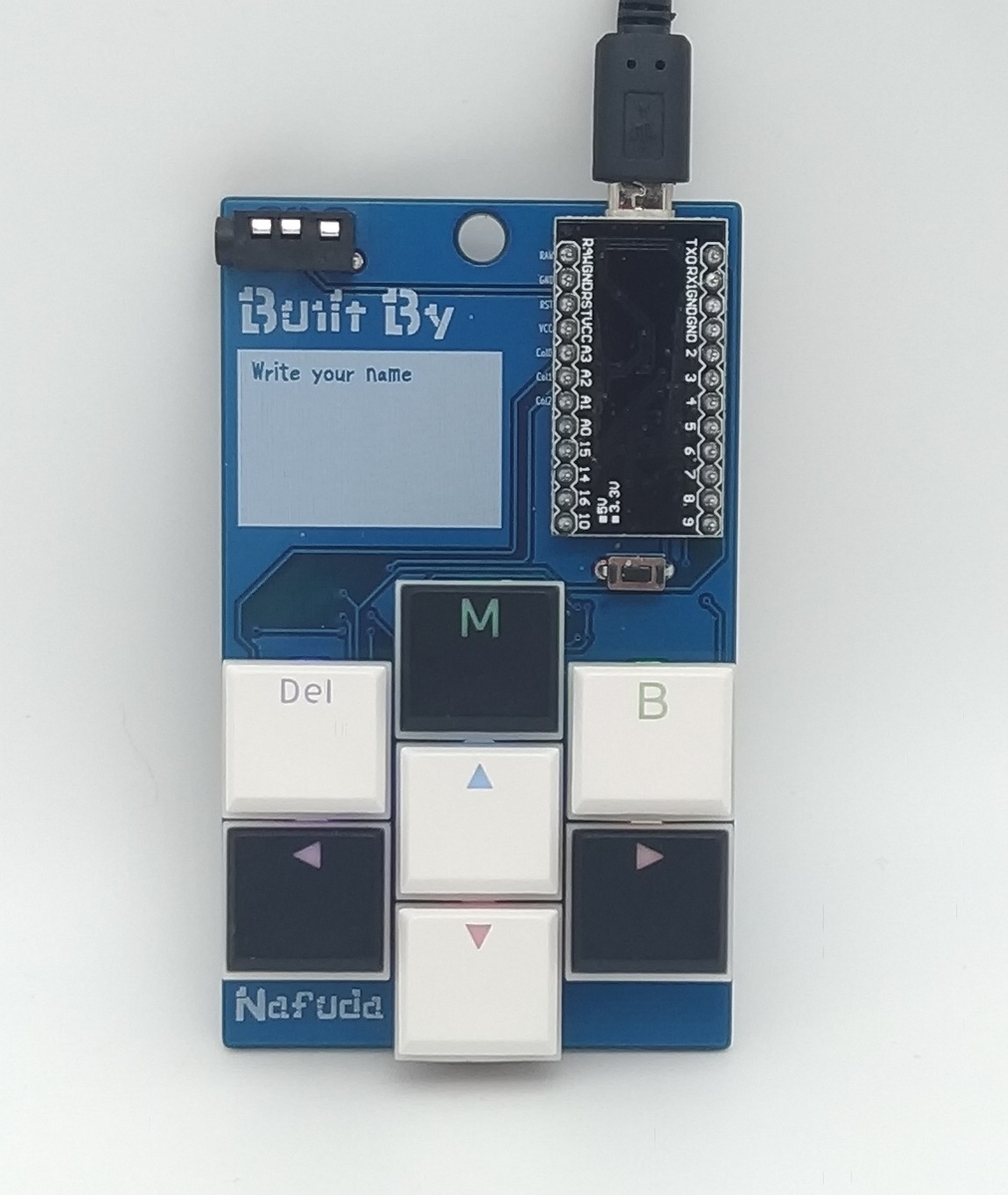
|
||||||
|
|
||||||
|
This is 7 keys cursor macropad.
|
||||||
|
|
||||||
|
* Keyboard Maintainer: [Salicylic_acid3](https://github.com/Salicylic-acid3)
|
||||||
|
* Hardware Supported: Nafuda PCB, Pro Micro
|
||||||
|
* Hardware Availability: [PCB & Case Data](https://github.com/Salicylic-acid3/PCB_Data), [Booth Shop](https://salicylic-acid3.booth.pm/items/1271706)
|
||||||
|
|
||||||
|
Make example for this keyboard (after setting up your build environment):
|
||||||
|
|
||||||
|
make nafuda:default
|
||||||
|
|
||||||
|
See the [build environment setup](https://docs.qmk.fm/#/getting_started_build_tools) and the [make instructions](https://docs.qmk.fm/#/getting_started_make_guide) for more information. Brand new to QMK? Start with our [Complete Newbs Guide](https://docs.qmk.fm/#/newbs).
|
||||||
|
|
||||||
|
[Build guide](https://salicylic-acid3.hatenablog.com/entry/nafuda-build-guide)
|
||||||
@@ -0,0 +1,33 @@
|
|||||||
|
# MCU name
|
||||||
|
MCU = atmega32u4
|
||||||
|
|
||||||
|
# Bootloader selection
|
||||||
|
# Teensy halfkay
|
||||||
|
# Pro Micro caterina
|
||||||
|
# Atmel DFU atmel-dfu
|
||||||
|
# LUFA DFU lufa-dfu
|
||||||
|
# QMK DFU qmk-dfu
|
||||||
|
# ATmega32A bootloadHID
|
||||||
|
# ATmega328P USBasp
|
||||||
|
BOOTLOADER = caterina
|
||||||
|
|
||||||
|
# Build Options
|
||||||
|
# change yes to no to disable
|
||||||
|
#
|
||||||
|
BOOTMAGIC_ENABLE = no # Virtual DIP switch configuration
|
||||||
|
MOUSEKEY_ENABLE = yes # Mouse keys
|
||||||
|
EXTRAKEY_ENABLE = yes # Audio control and System control
|
||||||
|
CONSOLE_ENABLE = no # Console for debug
|
||||||
|
COMMAND_ENABLE = yes # Commands for debug and configuration
|
||||||
|
NKRO_ENABLE = no # Nkey Rollover - if this doesn't work, see here: https://github.com/tmk/tmk_keyboard/wiki/FAQ#nkro-doesnt-work
|
||||||
|
BACKLIGHT_ENABLE = no # Enable keyboard backlight functionality
|
||||||
|
MIDI_ENABLE = no # MIDI controls
|
||||||
|
AUDIO_ENABLE = no # Audio output on port C6
|
||||||
|
UNICODE_ENABLE = no # Unicode
|
||||||
|
BLUETOOTH_ENABLE = no # Enable Bluetooth with the Adafruit EZ-Key HID
|
||||||
|
RGBLIGHT_ENABLE = yes # Enable WS2812 RGB underlight.
|
||||||
|
TAP_DANCE_ENABLE = no
|
||||||
|
OLED_DRIVER_ENABLE = no
|
||||||
|
# Do not enable SLEEP_LED_ENABLE. it uses the same timer as BACKLIGHT_ENABLE
|
||||||
|
SLEEP_LED_ENABLE = no # Breathing sleep LED during USB suspend
|
||||||
|
|
||||||
@@ -32,9 +32,9 @@ const uint16_t PROGMEM keymaps[][MATRIX_ROWS][MATRIX_COLS] = {
|
|||||||
// ┌───────┬───────┬───────┬───────┬───────┬───────┬───────┬───────┬───────┬───────┬───────┬───────┐
|
// ┌───────┬───────┬───────┬───────┬───────┬───────┬───────┬───────┬───────┬───────┬───────┬───────┐
|
||||||
KC_GRV, KC_1, KC_2, KC_3, KC_4, KC_5, KC_6, KC_7, KC_8, KC_9, KC_0, _______,
|
KC_GRV, KC_1, KC_2, KC_3, KC_4, KC_5, KC_6, KC_7, KC_8, KC_9, KC_0, _______,
|
||||||
// ├───────┼───────┼───────┼───────┼───────┼───────┼───────┼───────┼───────┼───────┼───────┼───────┤
|
// ├───────┼───────┼───────┼───────┼───────┼───────┼───────┼───────┼───────┼───────┼───────┼───────┤
|
||||||
_______,KC_VOLD,KC_MUTE,KC_VOLU,KC_MINS, KC_EQL,KC_LBRC,KC_RBRC,_______,_______,_______,_______,
|
_______,KC_VOLD,KC_MUTE,KC_VOLU,KC_MINS, KC_EQL,KC_MS_L,KC_MS_D,KC_MS_U,KC_MS_R,_______,_______,
|
||||||
// ├───────┼───────┼───────┼───────┼───────┼───────┼───────┼───────┼───────┼───────┼───────┼───────┤
|
// ├───────┼───────┼───────┼───────┼───────┼───────┼───────┼───────┼───────┼───────┼───────┼───────┤
|
||||||
_______,KC_MPRV,KC_MPLY,KC_MNXT,KC_UNDS,KC_PLUS,KC_LCBR,KC_RCBR,_______,_______,_______,_______,
|
_______,KC_MPRV,KC_MPLY,KC_MNXT,KC_UNDS,KC_PLUS,KC_BTN1,KC_BTN2,_______,_______,_______,_______,
|
||||||
// ├───────┼───────┼───────┼───────┼───────┼───────┼───────┼───────┼───────┼───────┼───────┼───────┤
|
// ├───────┼───────┼───────┼───────┼───────┼───────┼───────┼───────┼───────┼───────┼───────┼───────┤
|
||||||
_______,_______,_______,_______,_______,_______,_______,_______,_______,_______,_______,_______
|
_______,_______,_______,_______,_______,_______,_______,_______,_______,_______,_______,_______
|
||||||
// └───────┴───────┴───────┴───────┴───────┴───────┴───────┴───────┴───────┴───────┴───────┴───────┘
|
// └───────┴───────┴───────┴───────┴───────┴───────┴───────┴───────┴───────┴───────┴───────┴───────┘
|
||||||
|
|||||||
@@ -7,6 +7,7 @@ from . import compile
|
|||||||
from . import config
|
from . import config
|
||||||
from . import docs
|
from . import docs
|
||||||
from . import doctor
|
from . import doctor
|
||||||
|
from . import flash
|
||||||
from . import hello
|
from . import hello
|
||||||
from . import json
|
from . import json
|
||||||
from . import list
|
from . import list
|
||||||
|
|||||||
@@ -9,6 +9,9 @@ import subprocess
|
|||||||
from argparse import FileType
|
from argparse import FileType
|
||||||
|
|
||||||
from milc import cli
|
from milc import cli
|
||||||
|
from qmk.commands import create_make_command
|
||||||
|
from qmk.commands import parse_configurator_json
|
||||||
|
from qmk.commands import compile_configurator_json
|
||||||
|
|
||||||
import qmk.keymap
|
import qmk.keymap
|
||||||
import qmk.path
|
import qmk.path
|
||||||
@@ -30,20 +33,20 @@ def compile(cli):
|
|||||||
"""
|
"""
|
||||||
if cli.args.filename:
|
if cli.args.filename:
|
||||||
# Parse the configurator json
|
# Parse the configurator json
|
||||||
user_keymap = json.load(cli.args.filename)
|
user_keymap = parse_configurator_json(cli.args.filename)
|
||||||
|
|
||||||
# Generate the keymap
|
# Generate the keymap
|
||||||
keymap_path = qmk.path.keymap(user_keymap['keyboard'])
|
keymap_path = qmk.path.keymap(user_keymap['keyboard'])
|
||||||
cli.log.info('Creating {fg_cyan}%s{style_reset_all} keymap in {fg_cyan}%s', user_keymap['keymap'], keymap_path)
|
cli.log.info('Creating {fg_cyan}%s{style_reset_all} keymap in {fg_cyan}%s', user_keymap['keymap'], keymap_path)
|
||||||
qmk.keymap.write(user_keymap['keyboard'], user_keymap['keymap'], user_keymap['layout'], user_keymap['layers'])
|
|
||||||
cli.log.info('Wrote keymap to {fg_cyan}%s/%s/keymap.c', keymap_path, user_keymap['keymap'])
|
|
||||||
|
|
||||||
# Compile the keymap
|
# Compile the keymap
|
||||||
command = ['make', ':'.join((user_keymap['keyboard'], user_keymap['keymap']))]
|
command = compile_configurator_json(cli.args.filename)
|
||||||
|
|
||||||
|
cli.log.info('Wrote keymap to {fg_cyan}%s/%s/keymap.c', keymap_path, user_keymap['keymap'])
|
||||||
|
|
||||||
elif cli.config.compile.keyboard and cli.config.compile.keymap:
|
elif cli.config.compile.keyboard and cli.config.compile.keymap:
|
||||||
# Generate the make command for a specific keyboard/keymap.
|
# Generate the make command for a specific keyboard/keymap.
|
||||||
command = ['make', ':'.join((cli.config.compile.keyboard, cli.config.compile.keymap))]
|
command = create_make_command(cli.config.compile.keyboard, cli.config.compile.keymap)
|
||||||
|
|
||||||
else:
|
else:
|
||||||
cli.log.error('You must supply a configurator export or both `--keyboard` and `--keymap`.')
|
cli.log.error('You must supply a configurator export or both `--keyboard` and `--keymap`.')
|
||||||
|
|||||||
@@ -0,0 +1,88 @@
|
|||||||
|
"""Compile and flash QMK Firmware
|
||||||
|
|
||||||
|
You can compile a keymap already in the repo or using a QMK Configurator export.
|
||||||
|
A bootloader must be specified.
|
||||||
|
"""
|
||||||
|
import os
|
||||||
|
import sys
|
||||||
|
import subprocess
|
||||||
|
from argparse import FileType
|
||||||
|
|
||||||
|
from milc import cli
|
||||||
|
from qmk.commands import create_make_command
|
||||||
|
from qmk.commands import parse_configurator_json
|
||||||
|
from qmk.commands import compile_configurator_json
|
||||||
|
|
||||||
|
import qmk.path
|
||||||
|
|
||||||
|
|
||||||
|
def print_bootloader_help():
|
||||||
|
"""Prints the available bootloaders listed in docs.qmk.fm.
|
||||||
|
"""
|
||||||
|
cli.log.info('Here are the available bootloaders:')
|
||||||
|
cli.echo('\tdfu')
|
||||||
|
cli.echo('\tdfu-ee')
|
||||||
|
cli.echo('\tdfu-split-left')
|
||||||
|
cli.echo('\tdfu-split-right')
|
||||||
|
cli.echo('\tavrdude')
|
||||||
|
cli.echo('\tBootloadHID')
|
||||||
|
cli.echo('\tdfu-util')
|
||||||
|
cli.echo('\tdfu-util-split-left')
|
||||||
|
cli.echo('\tdfu-util-split-right')
|
||||||
|
cli.echo('\tst-link-cli')
|
||||||
|
cli.echo('For more info, visit https://docs.qmk.fm/#/flashing')
|
||||||
|
|
||||||
|
|
||||||
|
@cli.argument('-bl', '--bootloader', default='flash', help='The flash command, corresponding to qmk\'s make options of bootloaders.')
|
||||||
|
@cli.argument('filename', nargs='?', arg_only=True, help='The configurator export JSON to compile. Use this if you dont want to specify a keymap and keyboard.')
|
||||||
|
@cli.argument('-km', '--keymap', help='The keymap to build a firmware for. Use this if you dont have a configurator file. Ignored when a configurator file is supplied.')
|
||||||
|
@cli.argument('-kb', '--keyboard', help='The keyboard to build a firmware for. Use this if you dont have a configurator file. Ignored when a configurator file is supplied.')
|
||||||
|
@cli.argument('-b', '--bootloaders', action='store_true', help='List the available bootloaders.')
|
||||||
|
@cli.subcommand('QMK Flash.')
|
||||||
|
def flash(cli):
|
||||||
|
"""Compile and or flash QMK Firmware or keyboard/layout
|
||||||
|
|
||||||
|
If a Configurator JSON export is supplied this command will create a new keymap. Keymap and Keyboard arguments
|
||||||
|
will be ignored.
|
||||||
|
|
||||||
|
If no file is supplied, keymap and keyboard are expected.
|
||||||
|
|
||||||
|
If bootloader is omitted, the one according to the rules.mk will be used.
|
||||||
|
|
||||||
|
"""
|
||||||
|
command = []
|
||||||
|
if cli.args.bootloaders:
|
||||||
|
# Provide usage and list bootloaders
|
||||||
|
cli.echo('usage: qmk flash [-h] [-b] [-kb KEYBOARD] [-km KEYMAP] [-bl BOOTLOADER] [filename]')
|
||||||
|
print_bootloader_help()
|
||||||
|
return False
|
||||||
|
|
||||||
|
elif cli.args.keymap and not cli.args.keyboard:
|
||||||
|
# If only a keymap was given but no keyboard, suggest listing keyboards
|
||||||
|
cli.echo('usage: qmk flash [-h] [-b] [-kb KEYBOARD] [-km KEYMAP] [-bl BOOTLOADER] [filename]')
|
||||||
|
cli.log.error('run \'qmk list_keyboards\' to find out the supported keyboards')
|
||||||
|
return False
|
||||||
|
|
||||||
|
elif cli.args.filename:
|
||||||
|
# Get keymap path to log info
|
||||||
|
user_keymap = parse_configurator_json(cli.args.filename)
|
||||||
|
keymap_path = qmk.path.keymap(user_keymap['keyboard'])
|
||||||
|
|
||||||
|
cli.log.info('Creating {fg_cyan}%s{style_reset_all} keymap in {fg_cyan}%s', user_keymap['keymap'], keymap_path)
|
||||||
|
|
||||||
|
# Convert the JSON into a C file and write it to disk.
|
||||||
|
command = compile_configurator_json(cli.args.filename, cli.args.bootloader)
|
||||||
|
|
||||||
|
cli.log.info('Wrote keymap to {fg_cyan}%s/%s/keymap.c', keymap_path, user_keymap['keymap'])
|
||||||
|
|
||||||
|
elif cli.args.keyboard and cli.args.keymap:
|
||||||
|
# Generate the make command for a specific keyboard/keymap.
|
||||||
|
command = create_make_command(cli.config.flash.keyboard, cli.config.flash.keymap, cli.args.bootloader)
|
||||||
|
|
||||||
|
else:
|
||||||
|
cli.echo('usage: qmk flash [-h] [-b] [-kb KEYBOARD] [-km KEYMAP] [-bl BOOTLOADER] [filename]')
|
||||||
|
cli.log.error('You must supply a configurator export or both `--keyboard` and `--keymap`. You can also specify a bootloader with --bootloader. Use --bootloaders to list the available bootloaders.')
|
||||||
|
return False
|
||||||
|
|
||||||
|
cli.log.info('Flashing keymap with {fg_cyan}%s\n\n', ' '.join(command))
|
||||||
|
subprocess.run(command)
|
||||||
@@ -0,0 +1,59 @@
|
|||||||
|
"""Functions that build make commands
|
||||||
|
"""
|
||||||
|
import json
|
||||||
|
import qmk.keymap
|
||||||
|
|
||||||
|
|
||||||
|
def create_make_command(keyboard, keymap, target=None):
|
||||||
|
"""Create a make compile command
|
||||||
|
|
||||||
|
Args:
|
||||||
|
keyboard
|
||||||
|
The path of the keyboard, for example 'plank'
|
||||||
|
|
||||||
|
keymap
|
||||||
|
The name of the keymap, for example 'algernon'
|
||||||
|
|
||||||
|
target
|
||||||
|
Usually a bootloader.
|
||||||
|
|
||||||
|
Returns:
|
||||||
|
A command that can be run to make the specified keyboard and keymap
|
||||||
|
"""
|
||||||
|
if target is None:
|
||||||
|
return ['make', ':'.join((keyboard, keymap))]
|
||||||
|
return ['make', ':'.join((keyboard, keymap, target))]
|
||||||
|
|
||||||
|
|
||||||
|
def parse_configurator_json(configurator_filename):
|
||||||
|
"""Open and parse a configurator json export
|
||||||
|
"""
|
||||||
|
file = open(configurator_filename)
|
||||||
|
user_keymap = json.load(file)
|
||||||
|
file.close()
|
||||||
|
return user_keymap
|
||||||
|
|
||||||
|
|
||||||
|
def compile_configurator_json(configurator_filename, bootloader=None):
|
||||||
|
"""Convert a configurator export JSON file into a C file
|
||||||
|
|
||||||
|
Args:
|
||||||
|
configurator_filename
|
||||||
|
The configurator JSON export file
|
||||||
|
|
||||||
|
bootloader
|
||||||
|
A bootloader to flash
|
||||||
|
|
||||||
|
Returns:
|
||||||
|
A command to run to compile and flash the C file.
|
||||||
|
"""
|
||||||
|
# Parse the configurator json
|
||||||
|
user_keymap = parse_configurator_json(configurator_filename)
|
||||||
|
|
||||||
|
# Write the keymap C file
|
||||||
|
qmk.keymap.write(user_keymap['keyboard'], user_keymap['keymap'], user_keymap['layout'], user_keymap['layers'])
|
||||||
|
|
||||||
|
# Return a command that can be run to make the keymap and flash if given
|
||||||
|
if bootloader is None:
|
||||||
|
return create_make_command(user_keymap['keyboard'], user_keymap['keymap'])
|
||||||
|
return create_make_command(user_keymap['keyboard'], user_keymap['keymap'], bootloader)
|
||||||
@@ -14,6 +14,11 @@ def test_compile():
|
|||||||
assert check_subcommand('compile', '-kb', 'handwired/onekey/pytest', '-km', 'default').returncode == 0
|
assert check_subcommand('compile', '-kb', 'handwired/onekey/pytest', '-km', 'default').returncode == 0
|
||||||
|
|
||||||
|
|
||||||
|
def test_flash():
|
||||||
|
assert check_subcommand('flash', '-b').returncode == 1
|
||||||
|
assert check_subcommand('flash').returncode == 1
|
||||||
|
|
||||||
|
|
||||||
def test_config():
|
def test_config():
|
||||||
result = check_subcommand('config')
|
result = check_subcommand('config')
|
||||||
assert result.returncode == 0
|
assert result.returncode == 0
|
||||||
|
|||||||
+24
-10
@@ -38,14 +38,15 @@ static pin_t encoders_pad_b[] = ENCODERS_PAD_B;
|
|||||||
static int8_t encoder_LUT[] = {0, -1, 1, 0, 1, 0, 0, -1, -1, 0, 0, 1, 0, 1, -1, 0};
|
static int8_t encoder_LUT[] = {0, -1, 1, 0, 1, 0, 0, -1, -1, 0, 0, 1, 0, 1, -1, 0};
|
||||||
|
|
||||||
static uint8_t encoder_state[NUMBER_OF_ENCODERS] = {0};
|
static uint8_t encoder_state[NUMBER_OF_ENCODERS] = {0};
|
||||||
|
static int8_t encoder_pulses[NUMBER_OF_ENCODERS] = {0};
|
||||||
|
|
||||||
#ifdef SPLIT_KEYBOARD
|
#ifdef SPLIT_KEYBOARD
|
||||||
// right half encoders come over as second set of encoders
|
// right half encoders come over as second set of encoders
|
||||||
static int8_t encoder_value[NUMBER_OF_ENCODERS * 2] = {0};
|
static uint8_t encoder_value[NUMBER_OF_ENCODERS * 2] = {0};
|
||||||
// row offsets for each hand
|
// row offsets for each hand
|
||||||
static uint8_t thisHand, thatHand;
|
static uint8_t thisHand, thatHand;
|
||||||
#else
|
#else
|
||||||
static int8_t encoder_value[NUMBER_OF_ENCODERS] = {0};
|
static uint8_t encoder_value[NUMBER_OF_ENCODERS] = {0};
|
||||||
#endif
|
#endif
|
||||||
|
|
||||||
__attribute__((weak)) void encoder_update_user(int8_t index, bool clockwise) {}
|
__attribute__((weak)) void encoder_update_user(int8_t index, bool clockwise) {}
|
||||||
@@ -78,14 +79,16 @@ void encoder_init(void) {
|
|||||||
}
|
}
|
||||||
|
|
||||||
static void encoder_update(int8_t index, uint8_t state) {
|
static void encoder_update(int8_t index, uint8_t state) {
|
||||||
encoder_value[index] += encoder_LUT[state & 0xF];
|
encoder_pulses[index] += encoder_LUT[state & 0xF];
|
||||||
if (encoder_value[index] >= ENCODER_RESOLUTION) {
|
if (encoder_pulses[index] >= ENCODER_RESOLUTION) {
|
||||||
encoder_update_kb(index, false);
|
encoder_value[index]++;
|
||||||
}
|
|
||||||
if (encoder_value[index] <= -ENCODER_RESOLUTION) { // direction is arbitrary here, but this clockwise
|
|
||||||
encoder_update_kb(index, true);
|
encoder_update_kb(index, true);
|
||||||
}
|
}
|
||||||
encoder_value[index] %= ENCODER_RESOLUTION;
|
if (encoder_pulses[index] <= -ENCODER_RESOLUTION) { // direction is arbitrary here, but this clockwise
|
||||||
|
encoder_value[index]--;
|
||||||
|
encoder_update_kb(index, false);
|
||||||
|
}
|
||||||
|
encoder_pulses[index] %= ENCODER_RESOLUTION;
|
||||||
}
|
}
|
||||||
|
|
||||||
void encoder_read(void) {
|
void encoder_read(void) {
|
||||||
@@ -101,11 +104,22 @@ void encoder_read(void) {
|
|||||||
}
|
}
|
||||||
|
|
||||||
#ifdef SPLIT_KEYBOARD
|
#ifdef SPLIT_KEYBOARD
|
||||||
void encoder_state_raw(uint8_t* slave_state) { memcpy(slave_state, encoder_state, sizeof(encoder_state)); }
|
void encoder_state_raw(uint8_t* slave_state) { memcpy(slave_state, &encoder_value[thisHand], sizeof(uint8_t) * NUMBER_OF_ENCODERS); }
|
||||||
|
|
||||||
void encoder_update_raw(uint8_t* slave_state) {
|
void encoder_update_raw(uint8_t* slave_state) {
|
||||||
for (int i = 0; i < NUMBER_OF_ENCODERS; i++) {
|
for (int i = 0; i < NUMBER_OF_ENCODERS; i++) {
|
||||||
encoder_update(i + thatHand, slave_state[i]);
|
uint8_t index = i + thatHand;
|
||||||
|
int8_t delta = slave_state[i] - encoder_value[index];
|
||||||
|
while (delta > 0) {
|
||||||
|
delta--;
|
||||||
|
encoder_value[index]++;
|
||||||
|
encoder_update_kb(index, true);
|
||||||
|
}
|
||||||
|
while (delta < 0) {
|
||||||
|
delta++;
|
||||||
|
encoder_value[index]--;
|
||||||
|
encoder_update_kb(index, false);
|
||||||
|
}
|
||||||
}
|
}
|
||||||
}
|
}
|
||||||
#endif
|
#endif
|
||||||
@@ -1,13 +1,13 @@
|
|||||||
#ifndef DISABLE_RGB_MATRIX_RAINBOW_PINWHEELS
|
#ifndef DISABLE_RGB_MATRIX_RAINBOW_PINWHEELS
|
||||||
RGB_MATRIX_EFFECT(PINWHEELS)
|
RGB_MATRIX_EFFECT(RAINBOW_PINWHEELS)
|
||||||
# ifdef RGB_MATRIX_CUSTOM_EFFECT_IMPLS
|
# ifdef RGB_MATRIX_CUSTOM_EFFECT_IMPLS
|
||||||
|
|
||||||
static HSV PINWHEELS_math(HSV hsv, int8_t sin, int8_t cos, uint8_t i, uint8_t time) {
|
static HSV RAINBOW_PINWHEELS_math(HSV hsv, int8_t sin, int8_t cos, uint8_t i, uint8_t time) {
|
||||||
hsv.h += ((g_led_config.point[i].y - k_rgb_matrix_center.y) * 3 * cos + (56 - abs8(g_led_config.point[i].x - k_rgb_matrix_center.x)) * 3 * sin) / 128;
|
hsv.h += ((g_led_config.point[i].y - k_rgb_matrix_center.y) * 3 * cos + (56 - abs8(g_led_config.point[i].x - k_rgb_matrix_center.x)) * 3 * sin) / 128;
|
||||||
return hsv;
|
return hsv;
|
||||||
}
|
}
|
||||||
|
|
||||||
bool PINWHEELS(effect_params_t* params) { return effect_runner_sin_cos_i(params, &PINWHEELS_math); }
|
bool RAINBOW_PINWHEELS(effect_params_t* params) { return effect_runner_sin_cos_i(params, &RAINBOW_PINWHEELS_math); }
|
||||||
|
|
||||||
# endif // RGB_MATRIX_CUSTOM_EFFECT_IMPLS
|
# endif // RGB_MATRIX_CUSTOM_EFFECT_IMPLS
|
||||||
#endif // DISABLE_RGB_MATRIX_RAINBOW_PINWHEELS
|
#endif // DISABLE_RGB_MATRIX_RAINBOW_PINWHEELS
|
||||||
Reference in new issue
Block a user